CompTIA’s State of the Tech Workforce Canada is a regional version of CompTIA's State of the Tech Workforce initiative, providing an in-depth look at employment, economic impact, technology trends, salaries, hiring activity and more across the provinces and metropolitan areas of Canada.
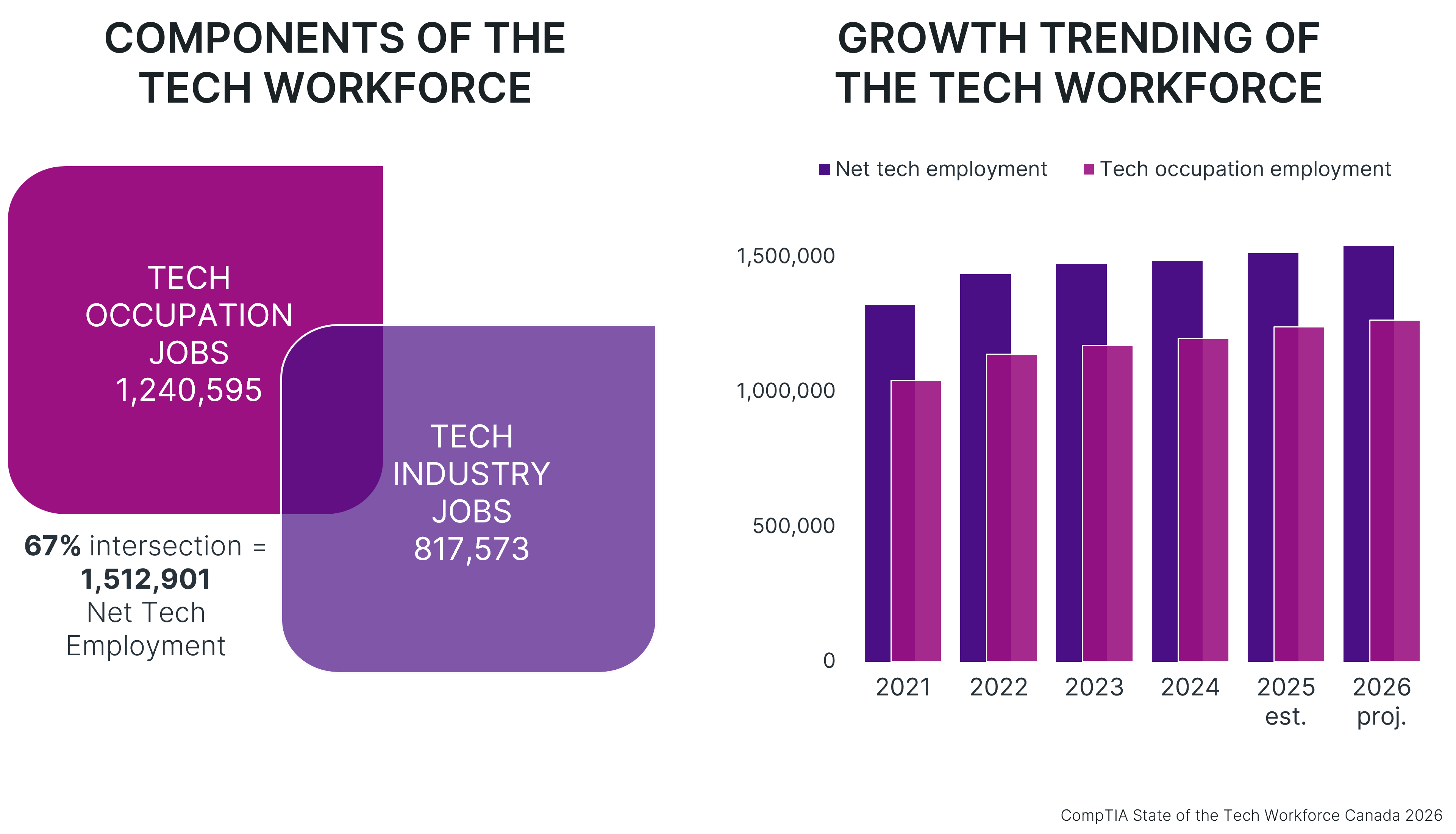
Net tech employment in reached an estimated 1,512,901 workers in 2025, an increase of 1.9% year-over-year or approximately 28,165 more workers employed in technology. This measure of employment provides the net of the Canadian tech industry workforce and the tech occupation workforce across all sectors. Net tech employment is forecasted to grow by 1.8% to 1.54 million in 2026. Since 2020, net tech employment increased by an estimated 307,580 new jobs. Net tech employment growth has been largely steady during this span.
The top provinces when it comes to projected net tech employment are Ontario and Quebec. The greatest number of jobs is projected to be added in Ontario in 2026. Employment concentration provides a measure of tech employment relative to employment across all the other industry sectors in a local economy. At about 9%, Ontario has the highest concentration of net tech employment as a percentage of its overall employment base. Quebec and British Columbia follow in the rankings.
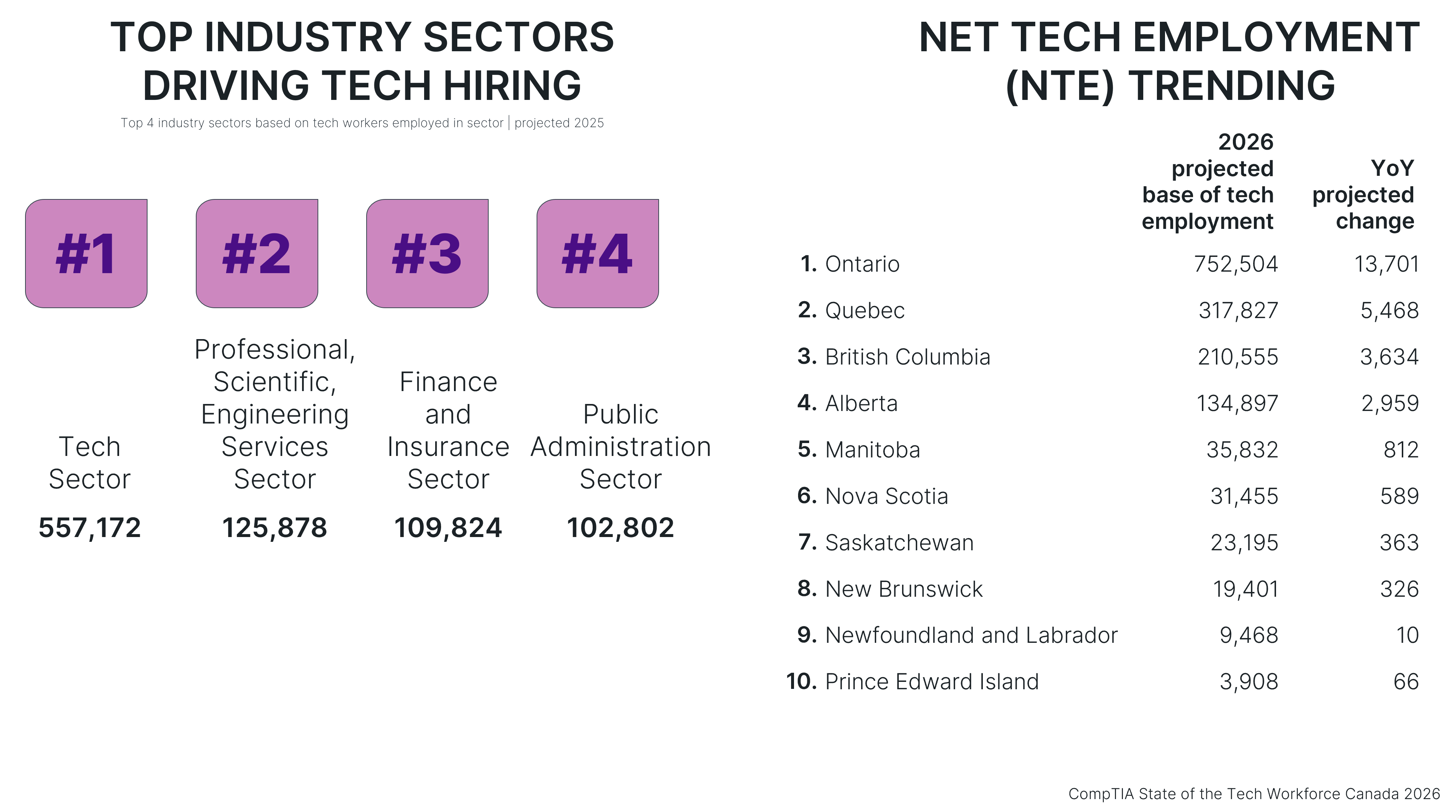
The top 4 sectors driving tech employment are Tech, Professional, Scientific, and Technical services, Finance and Insurance, and Public Administration. The top 10 sectors account for the employment of 89% of tech workers.
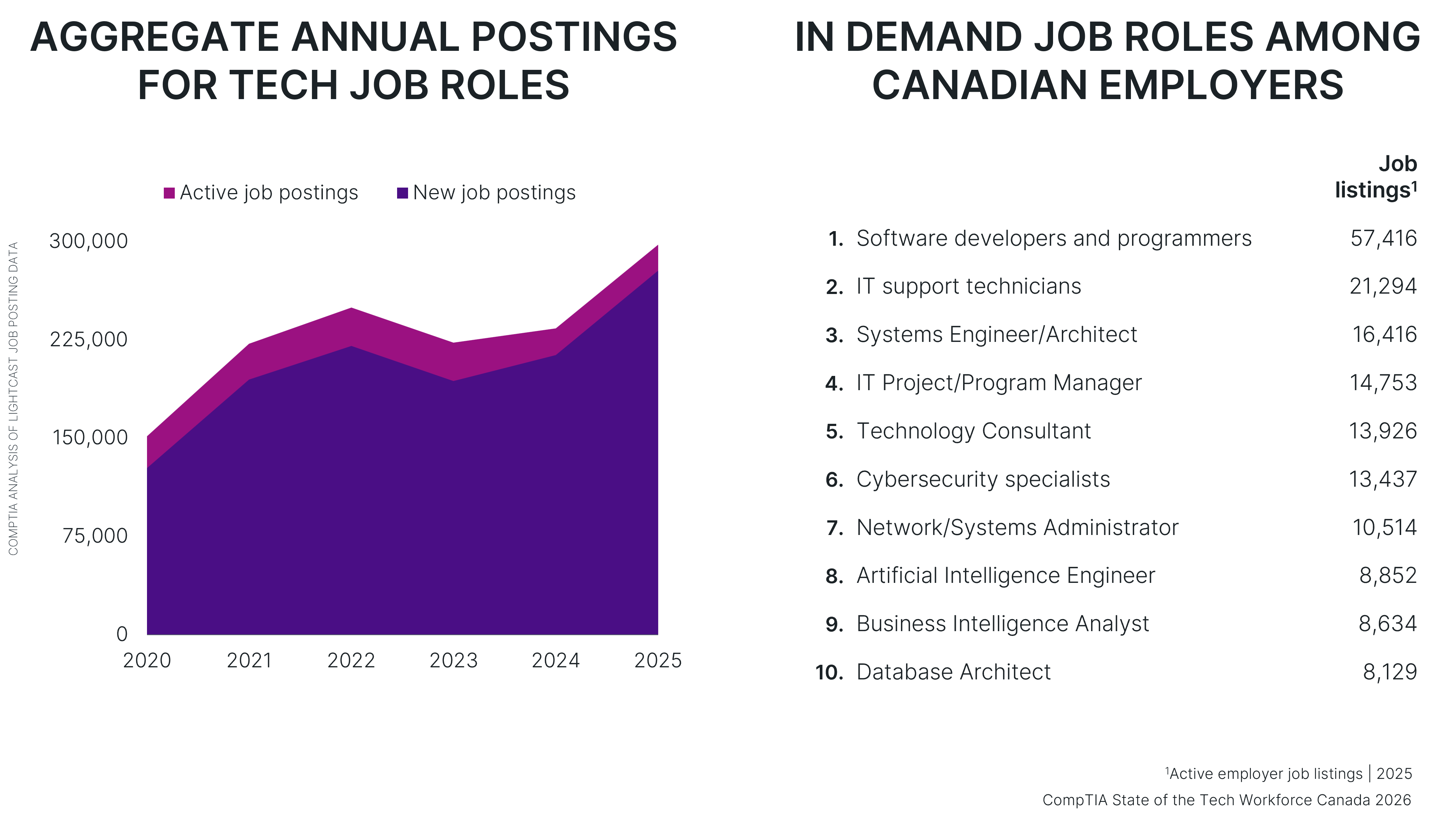
Employer job posting data from Lightcast provides another layer of insight into the tech job market outlook. Overall tech job postings fell in 2023 but has shown an upward trend since then. Employer hiring activity reflects the many interdependencies of digital transformation. Investments in infrastructure, software development, data, cybersecurity, systems and support round out the mix of job roles and skills Canadian employers seek. Slightly more than half of employer job postings for tech jobs during 2024 specified a required level of work experience, with the remaining 46% unspecified.
As a percentage of the overall Canadian economy, the tech industry accounts for approximately 5.9 percent of direct economic value, which translates to $138.4 billion CAD. In addition to the direct economic impact, there are downstream indirect benefits of the technology industry, such as the employment multiplier effect of technology ecosystems.