Job Seeker Trends: Unlocking Potential Through Professional Development
Understanding job market trends: What job seekers need to know
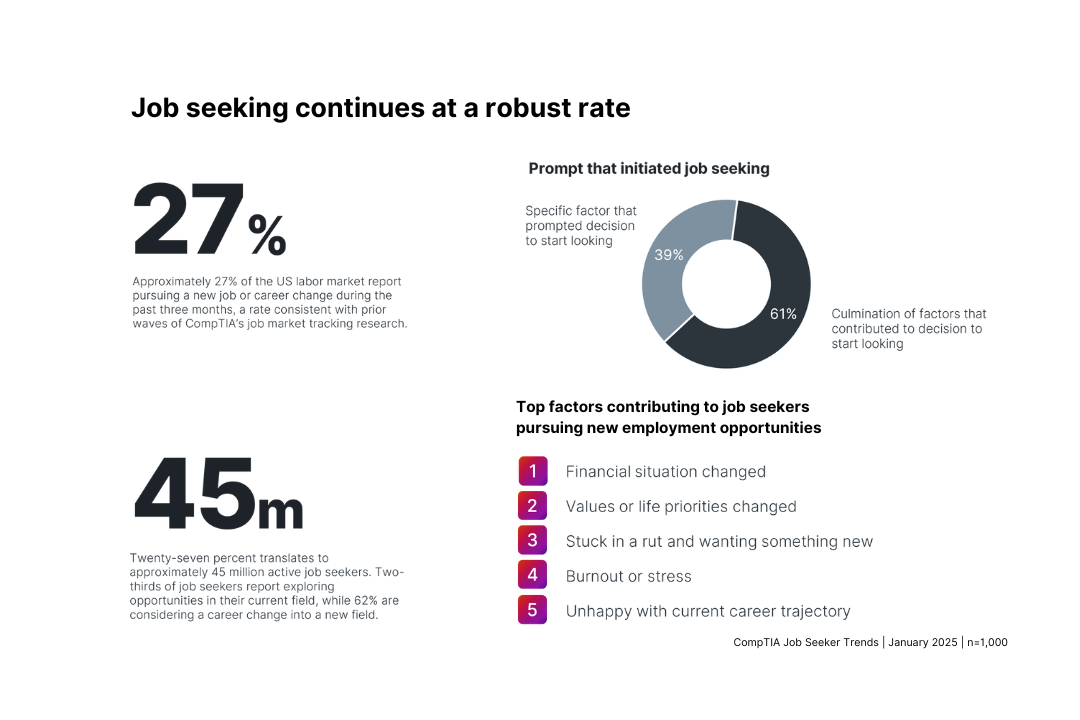
In 2025, job seekers are shaping the employment landscape through evolving career pathways and new behaviors. Flexibility, a positive company culture, and opportunities for professional development are increasingly important in today’s job market. According to CompTIA’s latest Job Seeker Trends research, 34% of the US workforce is actively pursuing a new job or career change — up from 27% earlier this year. This boost is driven by optimism about economic conditions and a desire for roles that provide stability, meaning, and long-term career growth.
Digital fluency, adaptability, and continuous skill development are now central to all industries. Candidates are prioritizing remote and hybrid work options, viewing them as standard rather than perks. For both employers and hiring teams, understanding these career pathways and job seeker priorities is critical to building recruitment strategies that attract top talent.
Navigating the job search: Insights for candidates in 2025
One standout trend is the heightened interest in technology career pathways, which surged from 16% to 22%. Other top fields of interest include sales and marketing, hospitality and travel, manufacturing, and construction/skilled trades. Career pathways help job seekers connect these interests to concrete opportunities by identifying required skills and advancement steps.
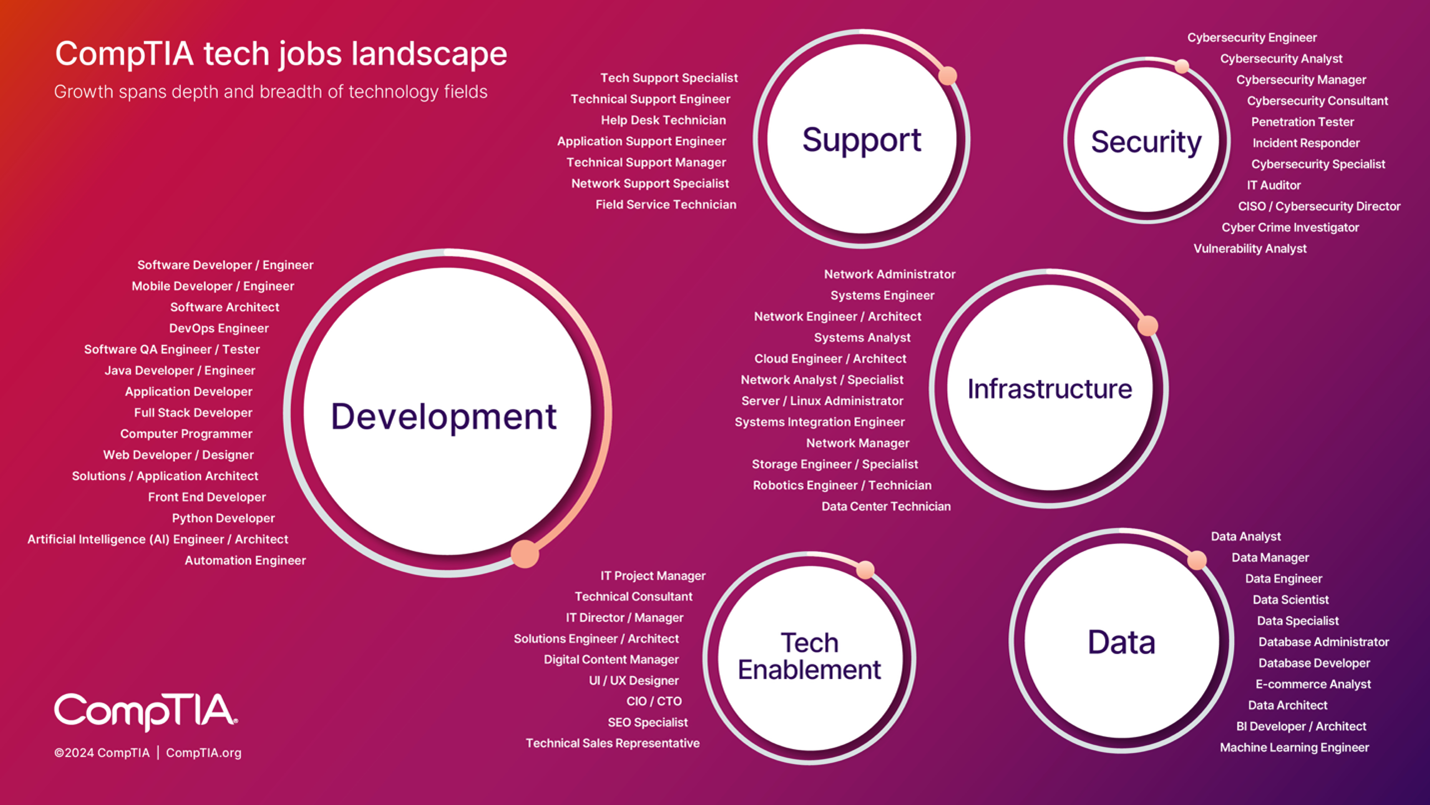
Current job search strategies demand a mix of technology, adaptability, and ongoing skills development. CompTIA’s Explore Tech Careers and Careers+ platforms guide candidates through structured pathways in areas such as cybersecurity, data science, software development, and technical support. These resources allow candidates to “test drive” roles and gain insights into industries experiencing the highest growth.
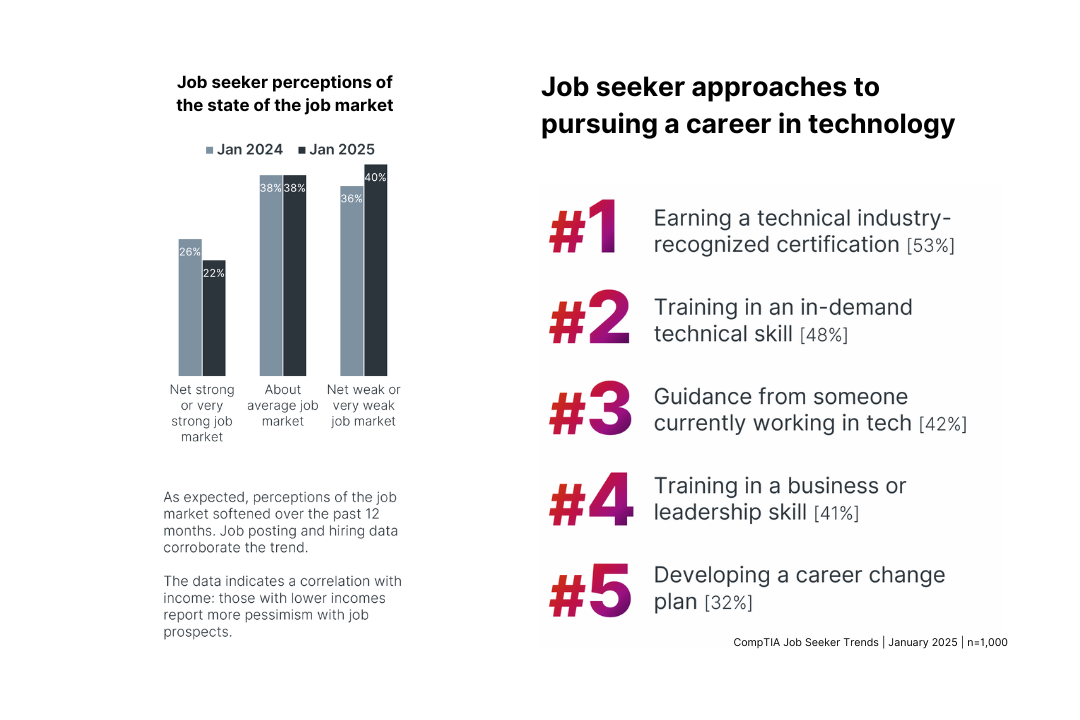
Investing in professional development is no longer optional—it is a consistent theme across both active and passive job seekers. Earning an industry-recognized certification tops the list of effective strategies for breaking into or advancing within technology careers, closely followed by targeted training in high-demand skills. Nearly half of professionals who are content in their current jobs still pursue upskilling, reinforcing the importance of lifelong learning.
The future of recruitment: Trends shaping talent acquisition
Concurrently, more employers recognize the value of aligning recruitment strategies with job seeker pathways and professional development goals. According to CompTIA’s 6th annual Workforce and Learning Trends:
- Certifications influence hiring: 93% of HR managers report that industry-recognized certifications factor into hiring for tech job roles.
- Certifications validate skills: 97% consider validating technical learning and skills attainment through certifications to be important.
- Training budgets are growing: 57% of HR departments plan to increase spending on training and development in the year ahead.
The impact of such investment is tangible. As one CompTIA certified professional shared: “CompTIA has expanded my career focus and vision. It has been a huge added bonus to my skill sets.” – Technical services professional, media & entertainment company.
The workplace is shifting, with nearly 9 in 10 job seekers rating digital fluency as essential. As demand grows for strong business and technical skills across roles, employers who align career pathways with training and certifications will have a competitive advantage. CompTIA supports this with resources such as the Essentials Series (AI, business, project management, and more) and a research library that tracks job seeker behaviors and workforce trends.
Prepare for the future of work
Top career pathway strategies for job seekers in 2025 include:
- Pursue industry-recognized certifications (such as those from CompTIA) to validate skills and boost hiring appeal.
- Develop digital and business competencies, as organizations seek employees who can collaborate and adapt.
- Leverage training and upskilling opportunities - nearly half of professionals upskill even when satisfied in their current roles.
- Build networks and connections - strong applications combined with active networking drive higher success.
Amid the continual evolution of work and technology, career pathways and professional development remain essential for both job seekers and employers. Whether you’re exploring a new career, seeking advancement, or building organizational talent, unlocking potential begins with investing in growth—for yourself, your team, and the future of work.
Ready for your next step?