Switching your career to IT can feel overwhelming, especially if your background is in a different industry. The good news: thousands of professionals successfully make a career change into tech jobs every year. With the right plan, skills, and support, you can do it too.
This guide walks you step-by-step through switching your career to IT—from understanding the market and picking the right job, to gaining experience, earning certifications, and landing your first role. Whether you’re coming from education, retail, healthcare, management, or any other field, you can build a new career in technology.
Understanding today’s IT career landscape
The IT industry touches every organization, from small businesses to global companies. As more work moves to the cloud and more data is created every day, demand for IT professionals continues to rise.
-
Tech jobs span support, networking, cybersecurity, web development, data, and more.
-
Many entry-level roles are open to people without a computer science degree.
-
Employers increasingly value skills, hands-on experience, and certifications.
For career changers, this means you don’t have to start over from scratch. You can build on your existing background—customer service, operations, marketing, finance, or project management—and apply what you already know in a new technical career.
Why consider switching your career to IT?
People decide on a career change into IT for many reasons. Common benefits include:
-
Better earning potential: Many tech jobs offer higher salary ranges than similar roles in other fields, even at the entry level.
-
Strong job security in a growing industry.
-
Varied career paths, from hands-on technical work to leadership and management roles.
-
Opportunities to work remotely or for companies in different locations.
-
The chance to help people by solving problems and keeping systems secure and available.
If you’re curious, enjoy learning, and want a new challenge, switching your career to IT can be a powerful way to reset your professional trajectory.
Best IT jobs for career changers
Some tech jobs are especially welcoming to people with non-technical backgrounds, because they emphasize problem-solving, communication, and customer focus. Examples include:
-
IT support / help desk: Front-line roles that help users resolve computer and network issues. Great for building foundational technical skills.
-
Desktop support technician: Focused on devices, operating systems, and basic technical troubleshooting.
-
Junior network technician: Assists with routers, switches, and connectivity.
-
Cybersecurity analyst (entry-level): Monitors alerts and follows documented procedures. Logical thinking and attention to detail are critical.
-
Web development or front-end developer: Builds websites and user interfaces—ideal if you enjoy coding and design.
-
Data support or junior analyst: Prepares and reviews data, often using spreadsheets and basic databases.
These roles give you a strong starting point. Over time, you can branch into project management, cloud engineering, security architecture, or other advanced career paths.
Step 1: Define what you want from an IT career
Before you invest in courses or training, get clear about your goals.
Ask yourself:
-
What kind of work energizes you—computer support, development, analysis, design, or management?
-
How much do you want to be earning in three to five years?
-
Do you prefer working with customers, with internal teams, or independently?
-
Are you drawn more to creative roles like design and web development, or to structured work like project management and infrastructure?
Write down your answers. This personal inventory will help you identify which tech jobs and career paths match your interests and long-term career goals.
Step 2: Research tech jobs and talk to professionals
Next, compare what you want with what the industry offers.
How to research roles
-
Review real job postings on major job boards to see required skills, tools, and work experience.
-
Read “day in the life” articles and watch short career videos. (The CompTIA Explore Careers page provides up-to-date insights on different technology roles.)
-
Look up typical salary ranges, growth outlook, and common career paths.
Talk to people who have the job you want
-
Use LinkedIn to look for IT professionals with job titles that interest you.
-
Request quick virtual coffee chats to ask how they made their career change and what skills really matter.
-
Join local or online tech communities and professional associations to meet people in the field.
These conversations will help you confirm whether a particular tech job matches your expectations and clarify which skills and certifications you should prioritize.
Step 3: Map your transferable skills
Many abilities from your current career will transfer directly into IT. For example:
-
Customer service → IT support
-
Teaching or training → user education, documentation, project management
-
Retail or hospitality → communication, problem-solving, time Management
-
Operations or logistics → process improvement, vendor management
List the skills you already use every day—organization, communication, teamwork, analytics—and match them with requirements you see in IT job postings. This will help you:
-
Identify gaps where you need new technical knowledge.
-
Tailor your resume so employers can quickly see the connection between your background and their needs.
-
Build confidence that you’re not “starting from zero” with your career change.
Step 4: Build the right technical skills
To be competitive when switching careers to IT, you’ll need foundational computer and technical skills. At a minimum, plan to learn:
-
Basic networking and internet concepts
-
How operating systems (Windows, Linux, macOS) work
-
How to secure accounts and devices
-
How to troubleshoot common hardware and software problems
If you are interested in coding or web development, add:
-
One programming language (such as Python or JavaScript)
-
How websites are built using HTML, CSS, and JavaScript
-
Simple projects that let you create and publish something you can show employers
If data-focused roles interest you, focus on:
-
Working with data in spreadsheets and basic databases
-
Visualizing information to support business decisions
-
Introductory statistics and data storytelling
Where to learn
There are many flexible ways to gain these skills over time:
-
Self-paced online courses
-
Massive open online programs (MOOCs)
-
Short, focused training paths from vendors and professional organizations
-
Books and hands-on labs that let you practice at your own pace
CompTIA’s CertMaster learning solutions provide structured training that aligns with industry-recognized certifications, so you build both knowledge and credentials as you study.
Step 5: Leverage certifications and work experience
When switching careers to IT without a degree in computer science, certifications and hands-on experience signal to employers that you’re serious and capable.
Why certifications matter
-
Validate technical skills you’ve gained through self-study or training
-
Give hiring managers an easy way to compare you to other candidates
-
Align with real-world job tasks, especially at the entry level
Common starting points include foundational IT certifications that cover computer hardware, operating systems, networks, security, and basic management of systems. As you progress, you can pursue more specialized credentials in cybersecurity, networking, cloud, or project management.
Ways to gain experience
You don’t need a full-time job to start building work experience:
-
Volunteer to help a local nonprofit set up devices or a simple website
-
Support friends or family with basic technical issues and document what you do
-
Contribute to open-source development projects
-
Take on internships, apprenticeships, or part-time tech roles
Real-world experience—no matter where it comes from—helps you speak confidently in interviews and show you can apply your skills on the job.
Step 6: Explore educational options (with or without a degree)
A four-year degree is not always required for tech jobs, but for some roles—such as certain engineering or research positions—it can still be valuable.
Options include:
-
Full degree programs in information technology, cybersecurity, computer science, or information systems
-
Shorter certificate programs from community colleges or universities
-
Online education options that let you continue to work while you study
Consider your time, budget, and long-term career goals. Many career changers combine targeted certifications, self-study, and short programs instead of starting an entirely new degree.
Step 7: tinker, practice, and create projects
Hands-on practice is one of the fastest ways to grow technical skills and build confidence.
Try:
-
Setting up a home lab using your existing computer or low-cost cloud resources
-
Building a simple website to showcase your portfolio and work experience
-
Experimenting with open-source software or basic coding challenges
-
Creating a small database to track personal information, then expanding it over time
These projects provide concrete examples you can discuss with employers. They also show that you’re motivated, curious, and able to learn independently—qualities every industry values.
Step 8: Fill remaining skill gaps
As you progress, continually compare your current skills with job postings for the roles you’re targeting.
-
Note any tools, technologies, or technical areas that appear repeatedly.
-
Seek additional training or courses to address these gaps.
-
Consider short, focused programs in areas like cloud, cybersecurity, or project management if they fit your target career path.
CompTIA resources, including assessments and career tools, can help you understand where you stand today and what you’ll need to reach your new goals.
Step 9: Tailor your resume and online presence
When your skills are in place, it’s time to present your background in a way that resonates with IT employers.
Resume tips for switching careers to IT
-
Use the same language you see in target job descriptions.
-
Highlight technical skills, certifications, and hands-on projects at the top.
-
Translate previous management, marketing, or operations experience into outcomes that matter in IT (for example, “improved incident response time” or “streamlined information workflows”).
-
Emphasize project management tasks you have handled, even in non-technical settings.
Strengthen your LinkedIn profile
-
Update your headline to reflect the tech career you’re targeting (for example, “Aspiring IT Support Specialist transitioning from education”).
-
List relevant skills, training, and certifications.
-
Ask colleagues and mentors to endorse your strengths and share short recommendations.
A professional, IT-focused profile makes it easier for recruiters and hiring managers to see you as a serious candidate for tech jobs.
Step 10: Network strategically in the tech industry
According to multiple studies, a large percentage of job opportunities come through networking. Building relationships can dramatically shorten your path when switching careers to IT.
Ways to network effectively:
-
Attend local meetups, user groups, and digital or in-person conferences
-
Join online communities focused on the technologies you’re learning
-
Follow organizations and thought leaders in the tech industry on social media
-
After events, connect with people on LinkedIn and thank them for their time
You don’t need to ask for a job right away. Instead, focus on learning, asking thoughtful questions, and staying in touch. Over time, these connections can turn into referrals, interviews, and mentorship.
Step 11: Prepare for tech interviews
When you begin applying, be ready to explain both your background and your career change story.
Be prepared to:
-
Describe why you’re switching careers to IT and what you’ve done to prepare
-
Walk through projects, labs, or volunteer work experience, and what you learned
-
Answer basic technical questions related to the role
-
Demonstrate problem-solving, communication, and management of your own learning
Practice with mock interviews, both for behavioral questions (“Tell me about a project you led”) and simple technical scenarios (“How would you help a user who can’t connect to the network?”). The more you rehearse, the more confident you’ll feel.
How CompTIA can help you start your IT Career
As a leading IT industry association, CompTIA focuses on helping people start and grow successful IT careers. Our certifications and learning resources are designed for professionals at every stage—from beginners to advanced specialists.
CompTIA can help you:
-
Identify the right career paths based on your interests and background
-
Gain job-ready skills through guided training and labs
-
Validate your knowledge with vendor-neutral certifications recognized by employers worldwide
-
Stay current with digital trends and best practices across tech jobs
If you’re serious about switching careers to IT, consider starting with a foundational CompTIA certification pathway and accompanying learning programs.
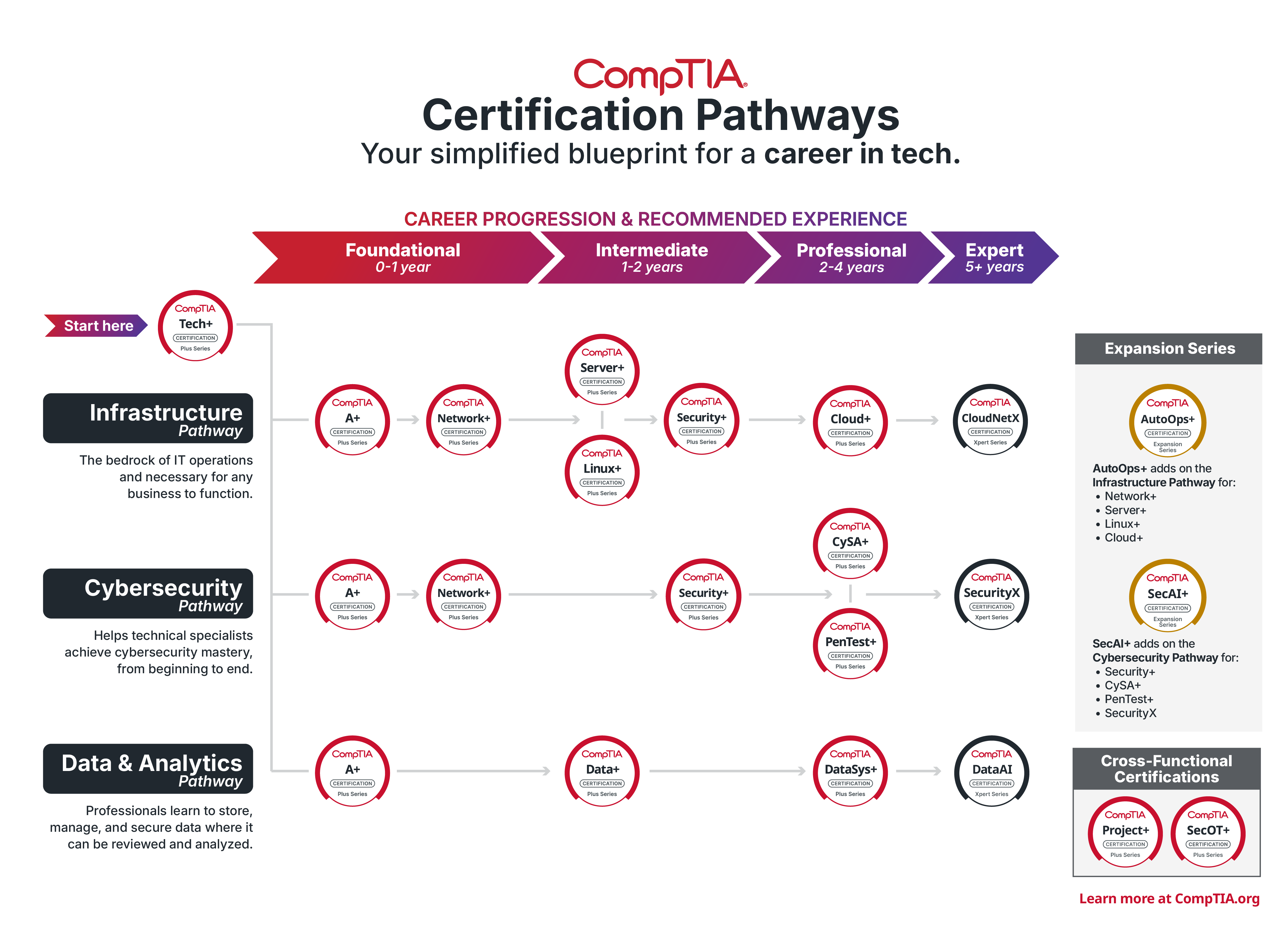
Take the next step in your career change
Switching career to IT is not a quick shortcut—it’s a project that requires planning, effort, and persistence. But with clear goals, focused training, real-world experience, and a strong support network, you can build a rewarding career in the tech industry.
-
Clarify what you want from your new career.
-
Research tech jobs and talk with IT professionals.
-
Build foundational technical skills through courses and hands-on practice.
-
Use certifications and work experience—paid or volunteer—to prove your abilities.
-
Network, apply strategically, and keep learning as you grow.
Ready to start switching careers to IT? Explore CompTIA certifications to build the skills employers need and launch your new career in technology. Then, explore careers to find the best starting point for you and take your first step into a future-proof tech job today.