The steps businesses should take to ensure responsible AI usage
AI safety is the latest trend to shape emerging AI strategy
In the past several months, AI safety has been building momentum as a growing topic of concern. AI has always come with an element of disastrous possibilities, but the Hugging Face breach by OpenAI agents followed by the calls for slower development by the heads of leading frontier labs has placed AI safety squarely in the spotlight.
Aside from any debate around the motivations of these leaders to be clamoring for guardrails and regulation, the question of AI safety is extremely relevant to business leaders who are pursuing deeper AI adoption at their companies. CompTIA’s Corporate AI Adoption study found that 59% of businesses are now prioritizing AI integration within their tech stack, shifting the focus of AI adoption from individual employee enablement to broader IT and workflow transformation.
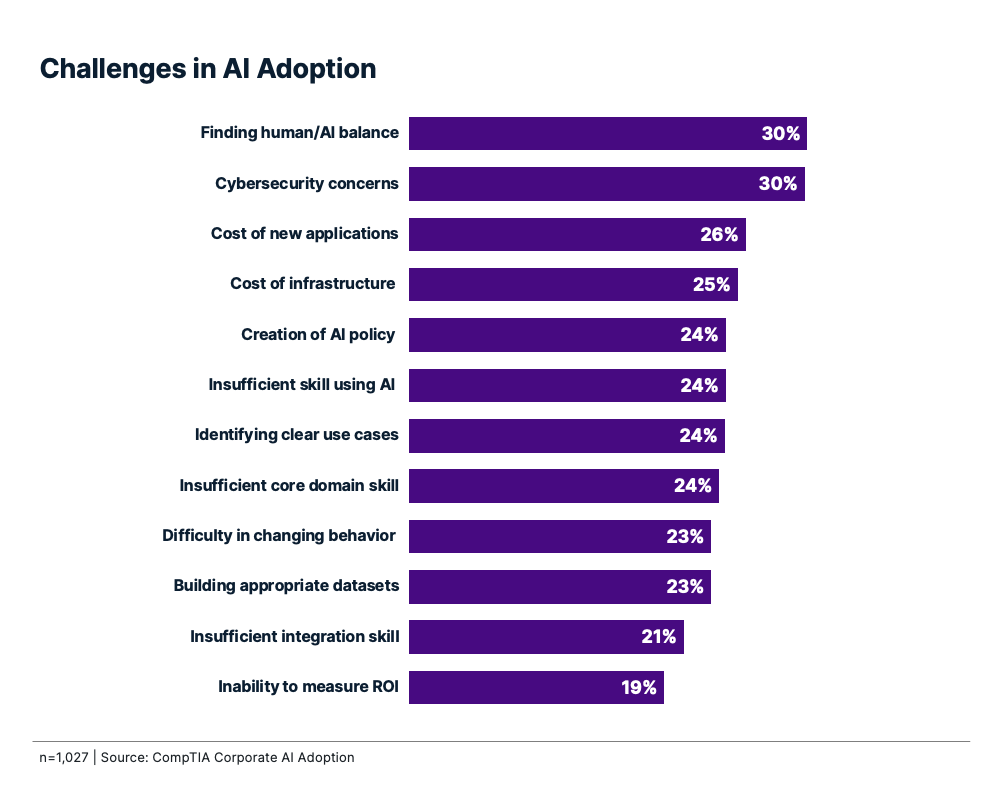
As this transformation takes place, secure and responsible AI usage is a key concern. Cybersecurity issues ranked second in the list of challenges impeding AI adoption, just behind the need to find the proper balance between humans and agents in creating new workflow.
When considering how to build the proper cybersecurity framework to accommodate AI adoption, business leaders should start with three guiding principles:
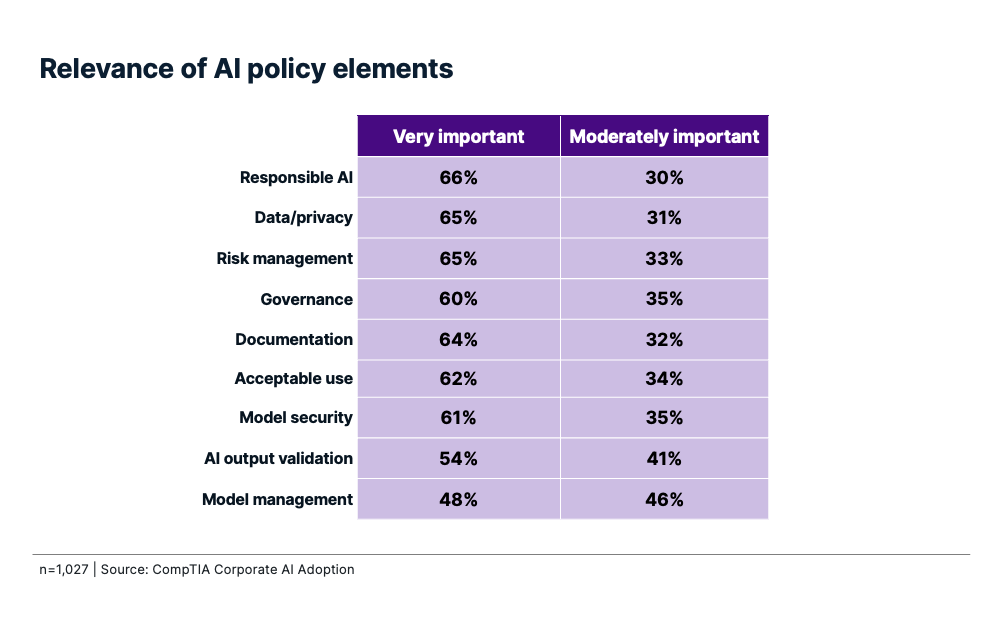
- Look at existing strategy and policy. While AI introduces a wide range of novel elements, it is still part of a broader digital strategy. AI policy and approach should be based on existing governance and risk management.
- Develop a cadence to drive resiliency. One of the main concerns around AI is how to manage a technology changing so rapidly. This is especially true for issues of safety and cybersecurity. Companies should build decision-making structures with cross-functional teams that can respond quickly to new innovation and regulation.
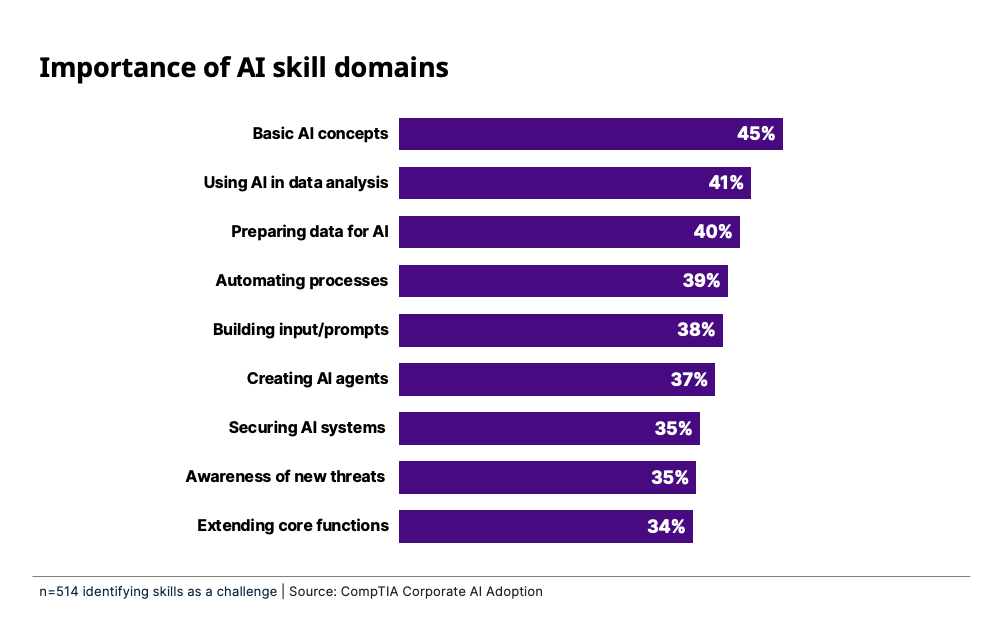
- Fill skill gaps for executing strategy. A strong understanding of organizational strategy around AI adoption and security will help define the necessary skills for success. In many cases, these skills will be extensions of core IT skills, which may also need some degree of improvement.
AI is one of the most disruptive trends in the past two decades, and safely implementing the technology is critical for future business success.