AI全般について「非常によく知っている」または「ある程度知っている」
概要
生成AIの登場から4年が近づくなか、その熱狂は依然として続いている一方で、一部では幻滅期の兆しも見え始めています。生産性向上効果の測定が曖昧であることやコスト増加への懸念に加え、多くの組織が直面している課題の一つが「人材のスキル」です。
CompTIAが初めて実施した「AI Skills Tracker」は、個人レベルでのスキル習得動向を把握するための基準となる調査です。その結果、生成AIに対する理解度や業務への好影響を最も高く実感しているのは、積極的にスキル習得に取り組んでいる人々、つまり最も好奇心旺盛な層であることが明らかになりました。
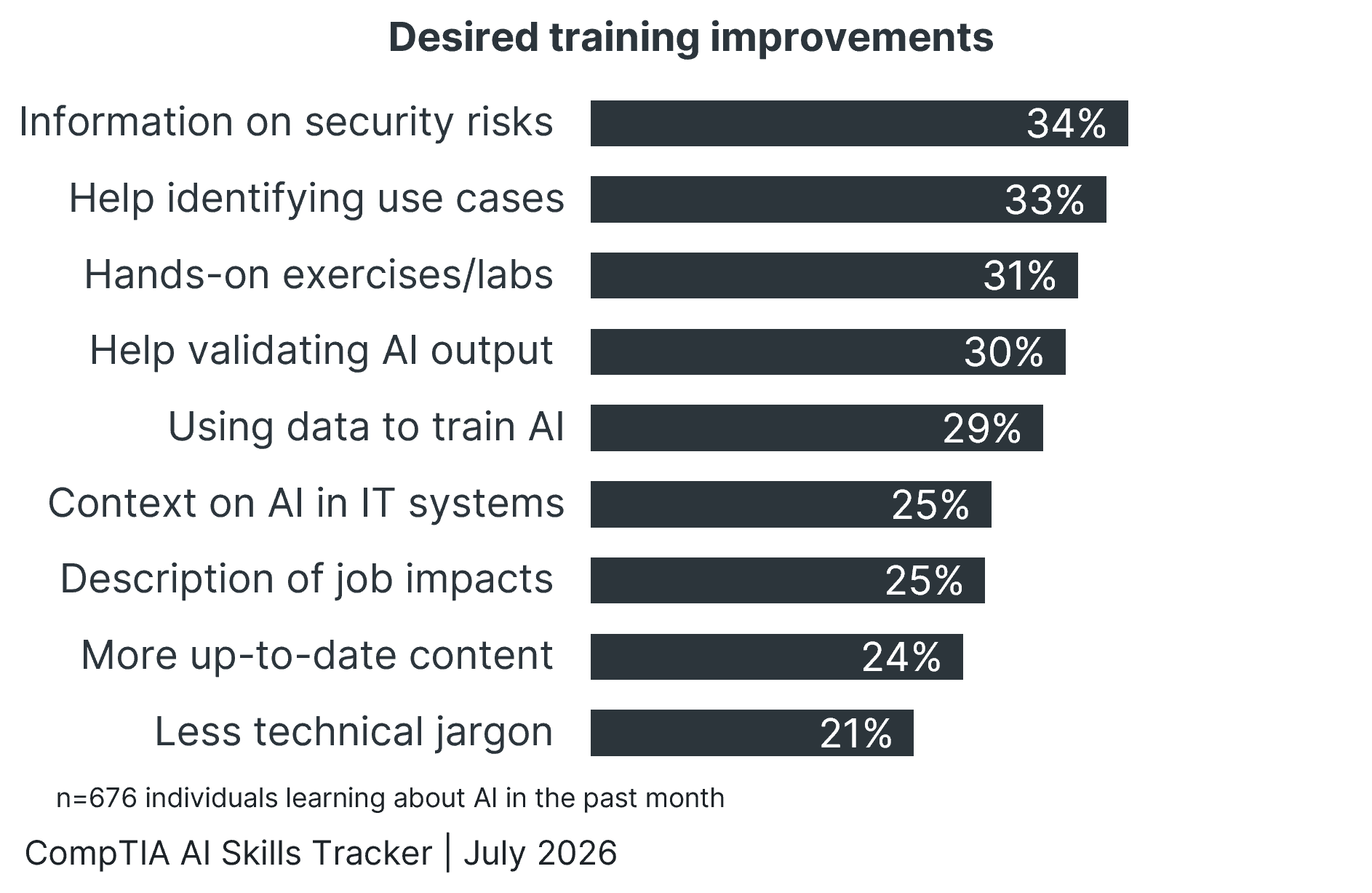
これまでのAI教育は、独学やオンラインコンテンツなどの非公式・非体系的な学習方法が中心でした。しかし今後は、セキュリティへの配慮、明確な業務活用事例、そして実践的なハンズオン学習へのニーズが高まることで、より体系的で質の高いトレーニングの提供が求められるようになるでしょう。また、AIを適切に活用できることを示す「AIリテラシーの証明」は、キャリア形成や成長において価値ある資産となることが期待されています。
主な統計
60%
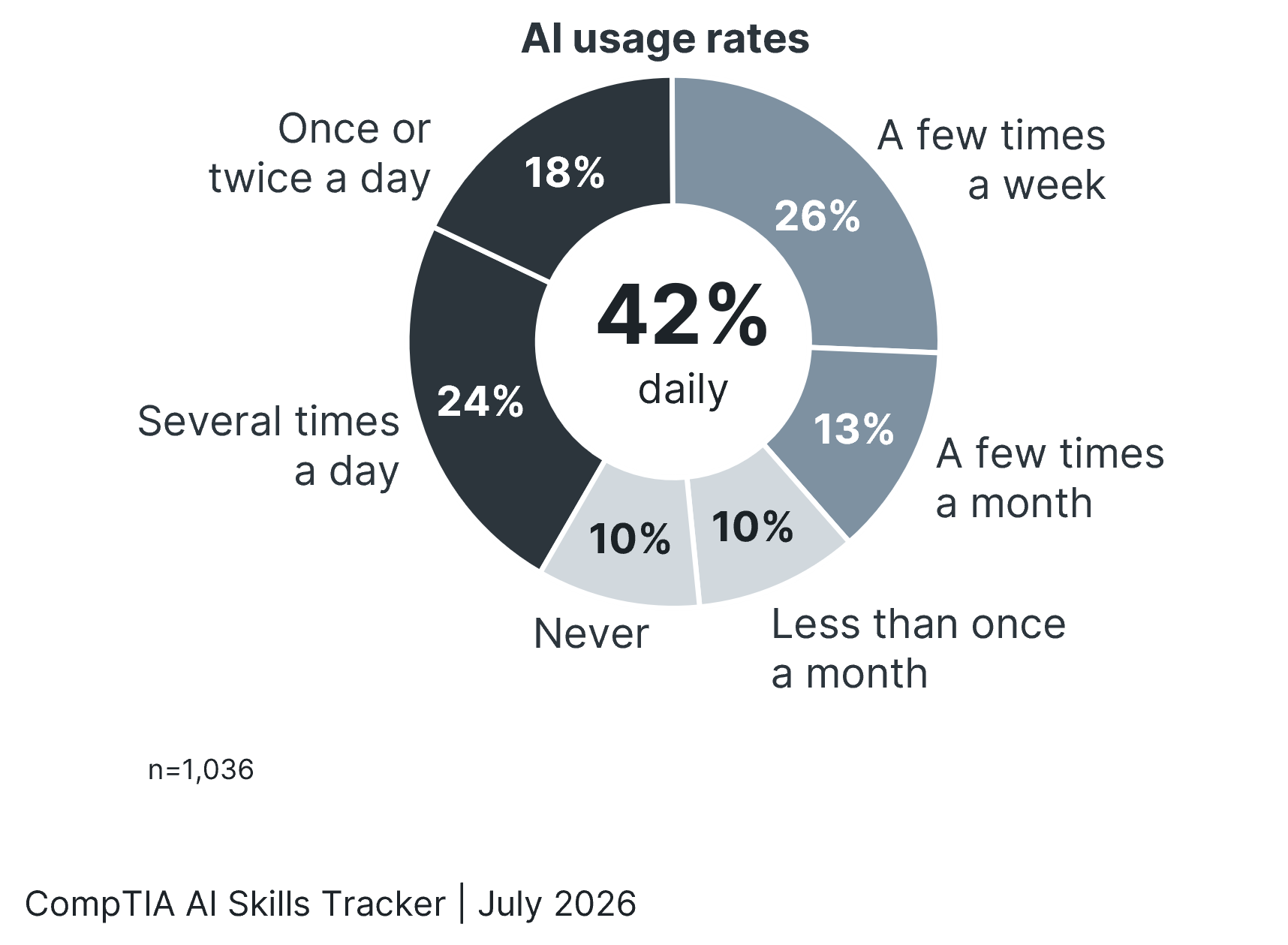
42%
日常ベースでAIを利用している
71%
AIによって仕事の成果や効率が向上している68%
AIスキルはキャリアの成長に不可欠である52%
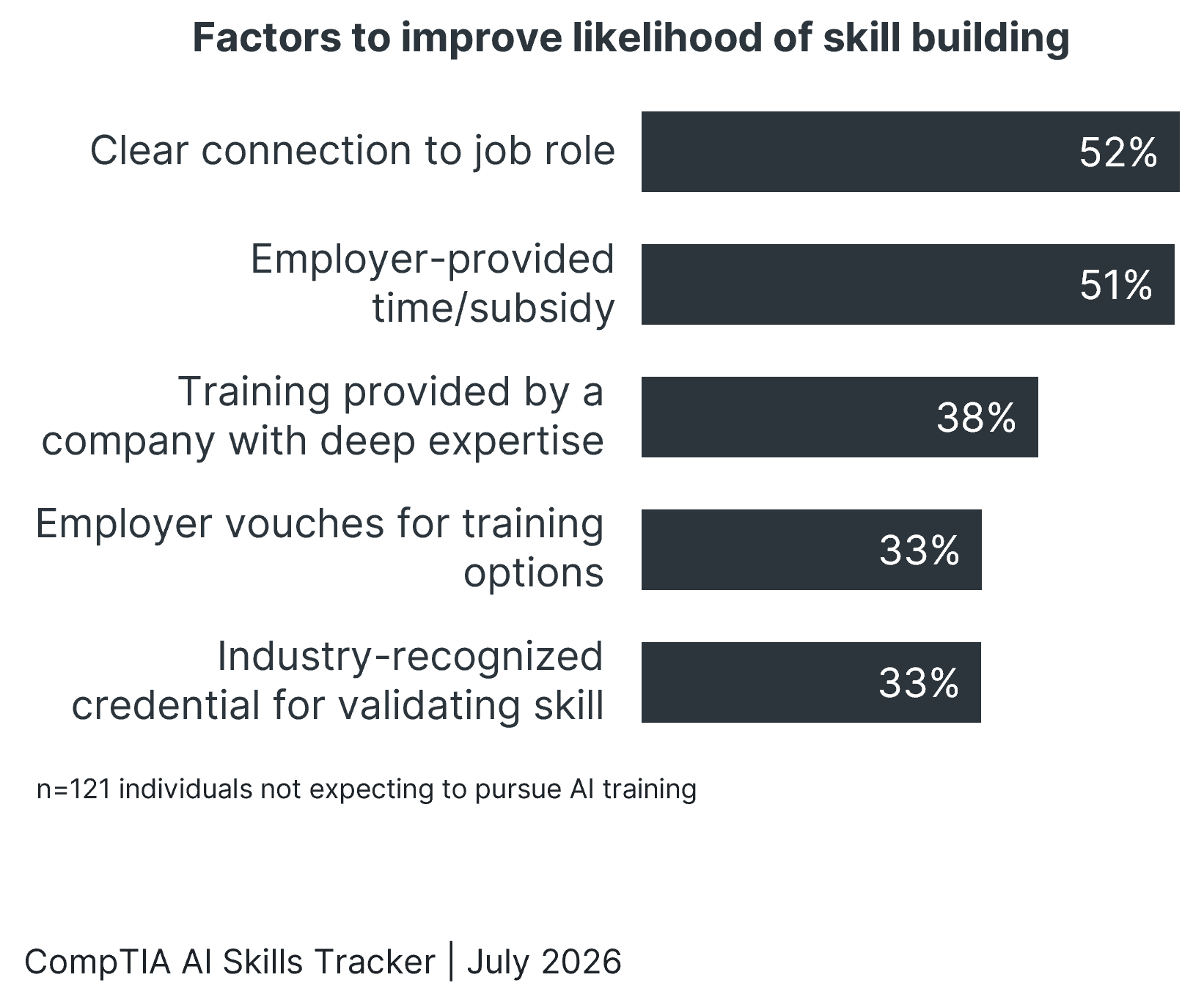
職務との結びつきが明確なほど、AIトレーニングを受けたいと考える傾向が強い
1. AIに対する理解度(Familiarity Levels)
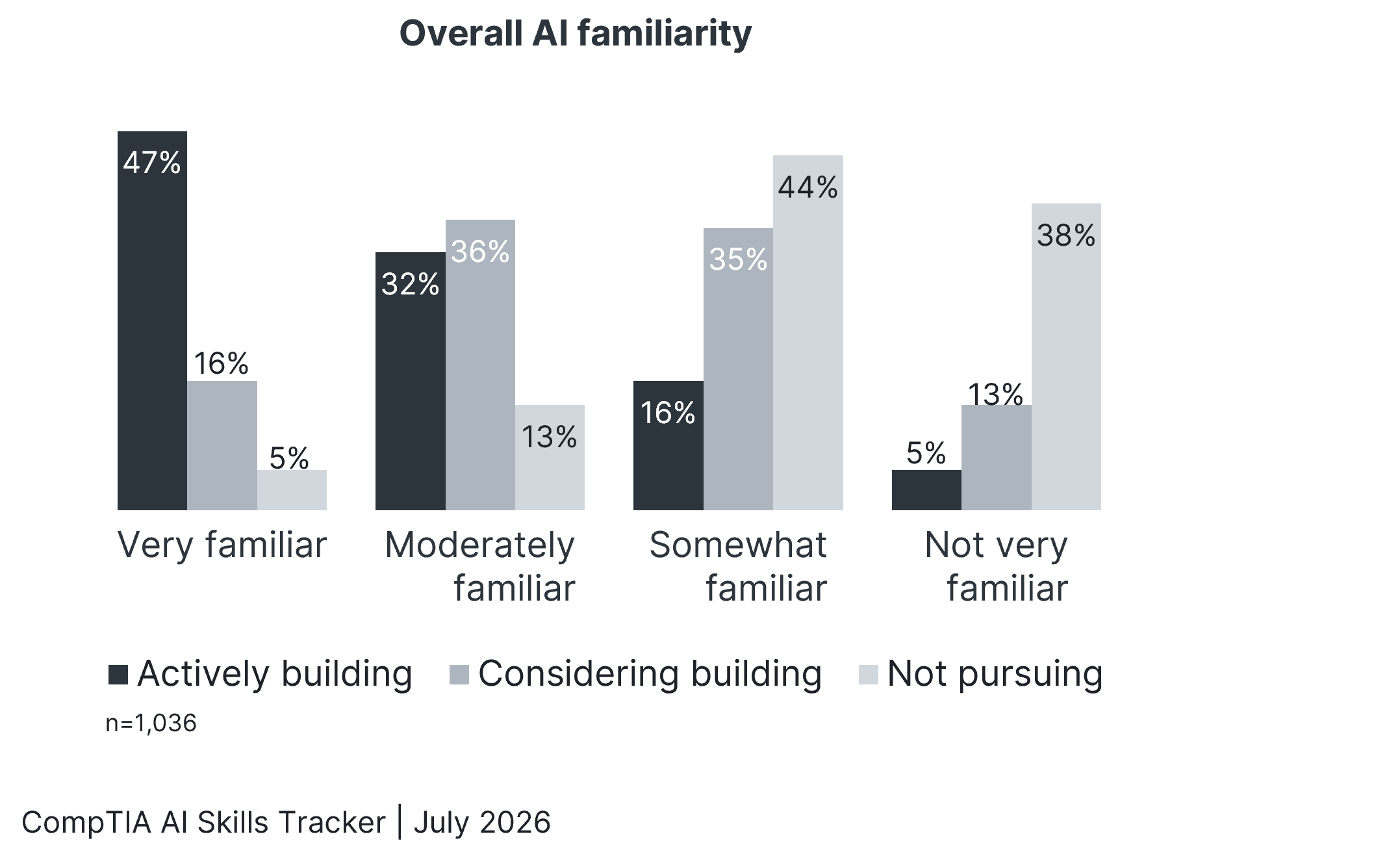
AIに関する理解度は、個人のAI活用能力を把握するための最初の指標となります。調査対象者全体では、29%が「AIについて非常によく知っている」と回答しました。
この結果を大きく押し上げているのは、新たなスキル習得に積極的に取り組んでいる人々であり、その47%が「AIについて非常によく知っている」と回答しています。これは、主体的な学習意欲や好奇心が、AIの複雑さに対するより深い理解につながっていることを示しています。
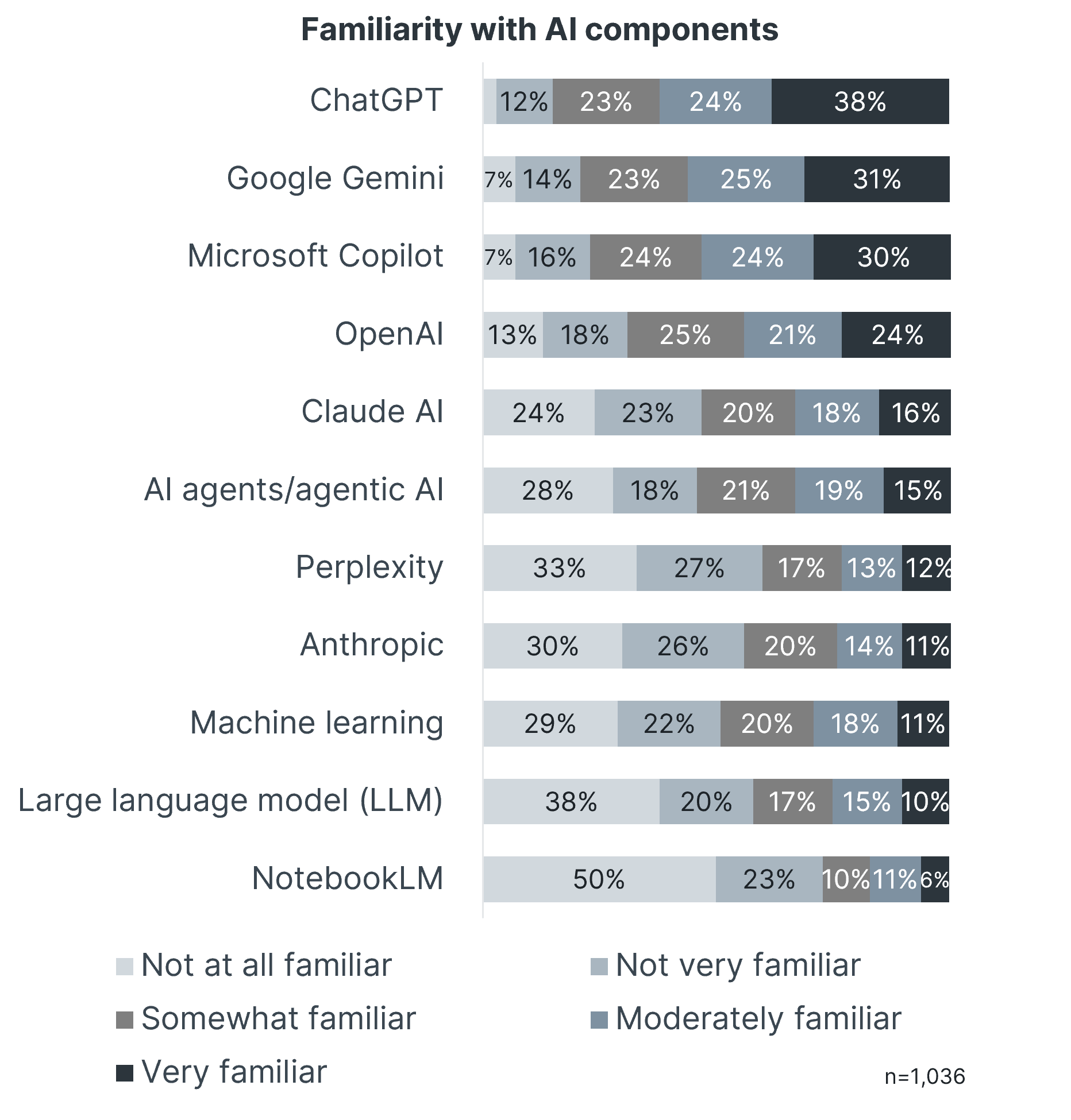
また、AIの複雑さに対する理解が必ずしも十分ではないことも明らかになっています。具体的なAIツールの認知度を見ると、市場投入が早かったツールや強力なブランドを持つ企業のツールである上位3つを除くと、認知度は大きく低下しています。これは、多くの人のAIツールに関する理解や認知が、一部の有名なツールに集中していることを示しています。
2.AI利用の傾向(Usage Patterns)
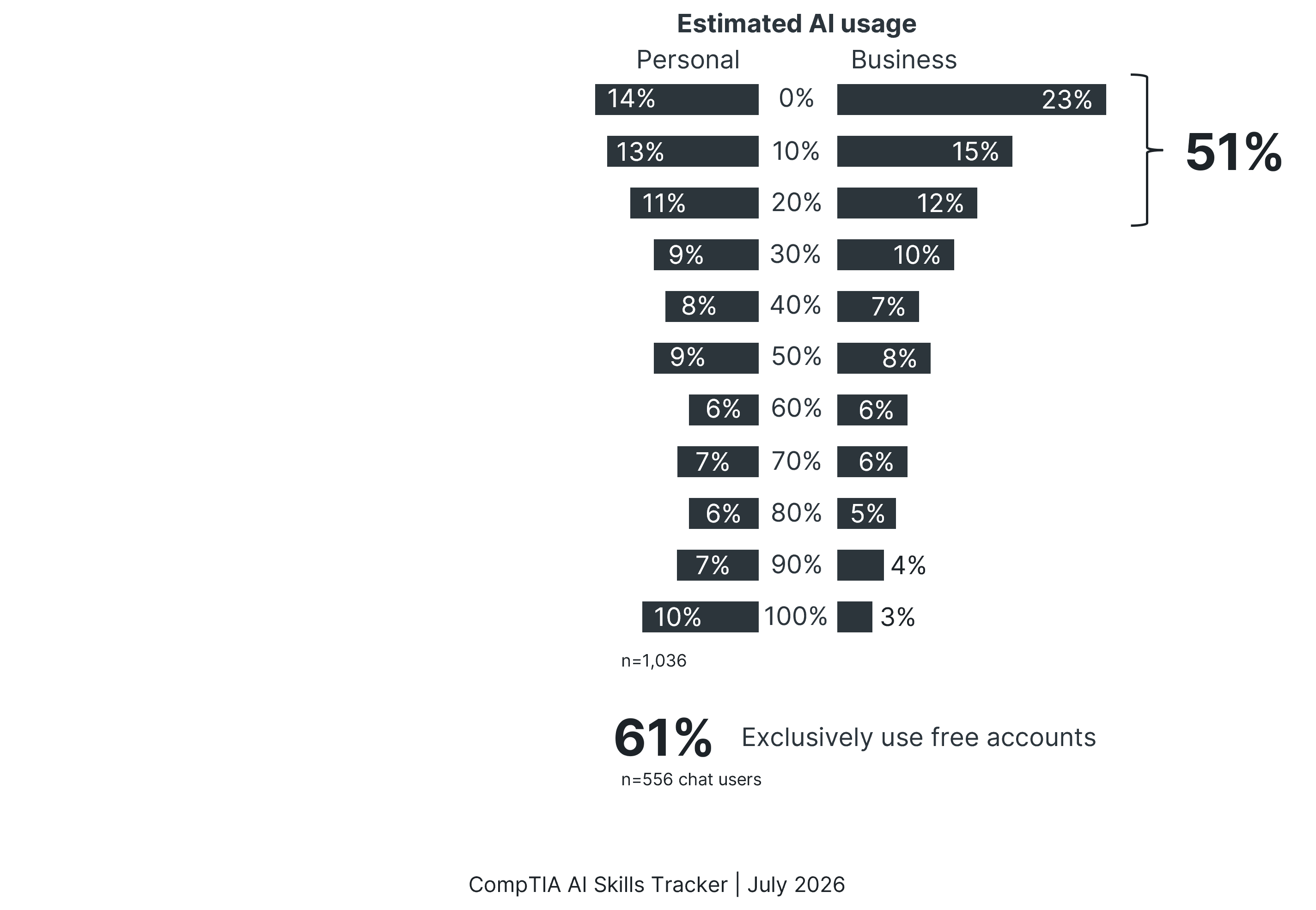
AIの利用はかなり浸透しており、回答者の80%が少なくとも月に複数回以上AIを利用していると回答しています。
しかし、その利用は主に個人利用に偏っています。回答者の半数以上は、自身のAI利用全体に占める業務利用の割合が20%以下であると見積もっています。また、10人中6人以上が無料版のAIサービスのみを利用していると回答しており、これは企業のデータやシステムとの連携が行われていない、あるいは企業の承認を受けない形で連携されている可能性を示唆しています。
3. 業務への影響(Workplace Impact)
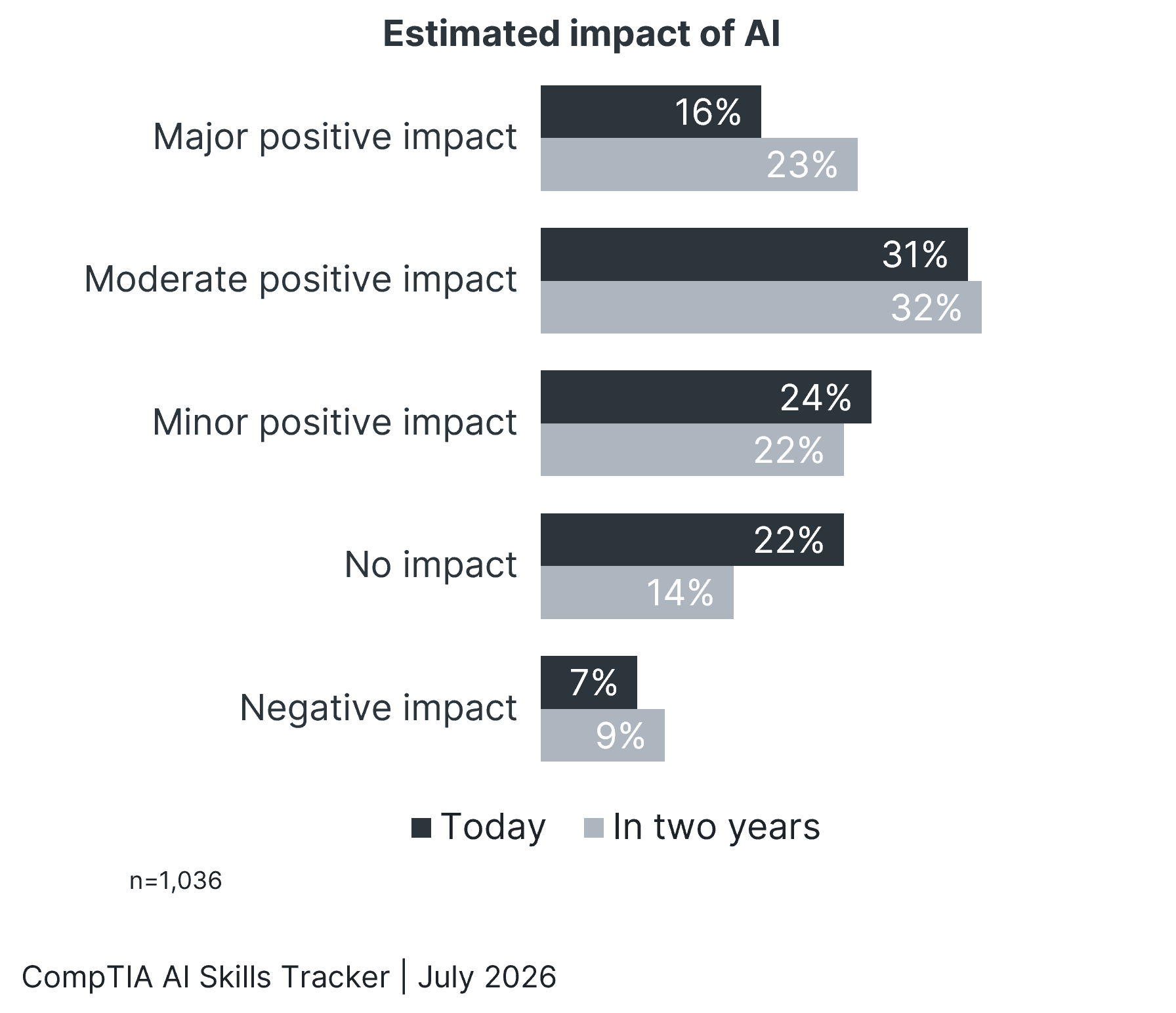
市場に生成AIが登場してから3年以上が経過した現在でも、AIが仕事に大きなプラスの影響を与えていると回答する人は多くありません。
さらに注目すべき点は、2年後を見据えた場合でも、AIによる業務への影響が大幅に高まると考えている人はそれほど多くないということです。
より大きな効果を生み出すためには、従業員が自らの業務にどのようにAIを活用できるのかを具体的に理解できる、職務に関連したユースケースの提示が必要であることが示されています。
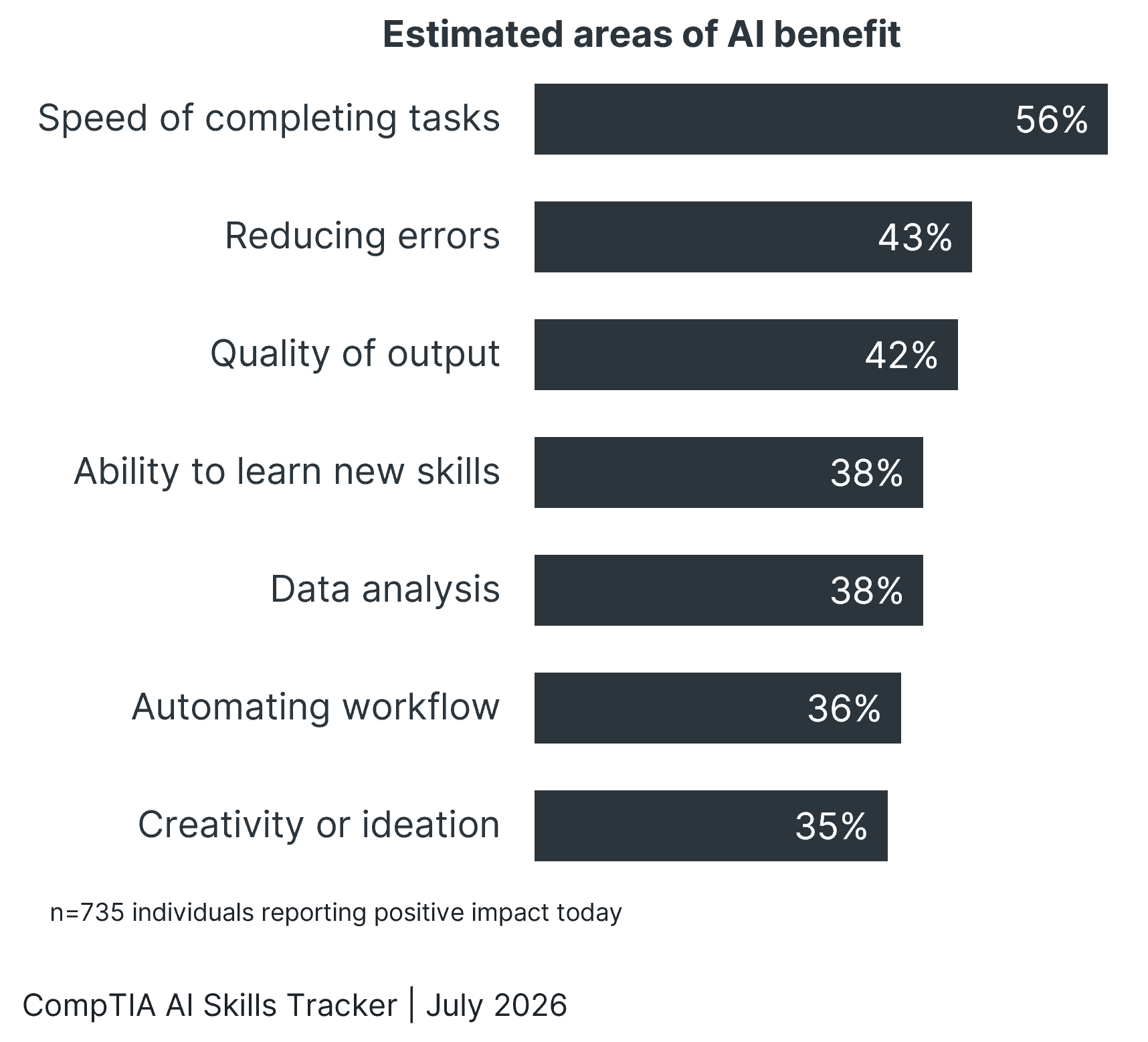
回答者の半数以上が、AIは業務をより迅速に進めるのに役立っていると回答しています。しかし、従業員がAIの出力結果を適切に検証したり、業務プロセスの中で必要な品質チェックを実施したりしなければ、こうした効率化はかえって生産性に悪影響を及ぼす可能性があります。
4. スキル評価(Skill Assessment)
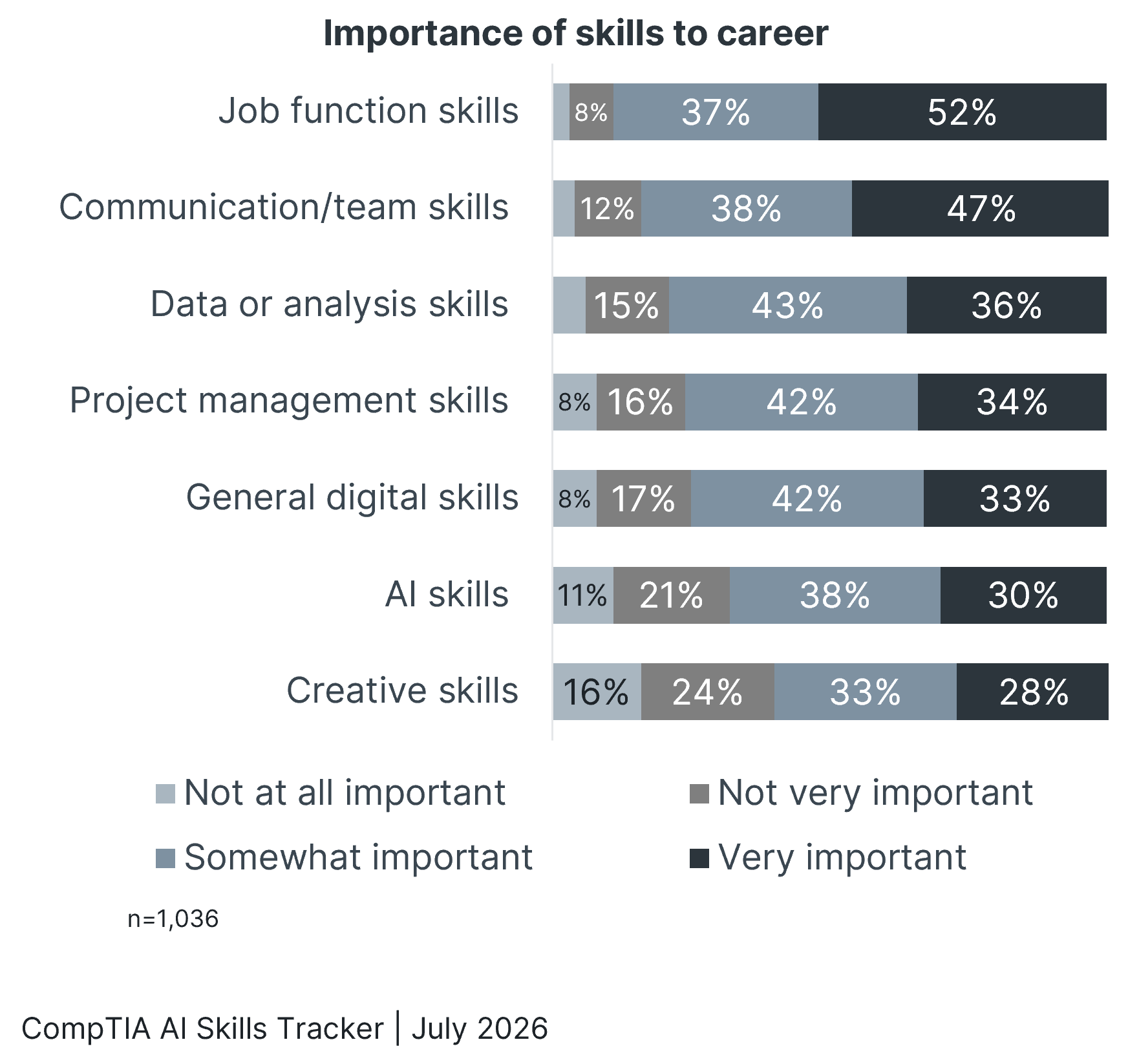
全体として見ると、AIスキルの重要性は、依然として多くの既存のスキルセットを下回っています。
積極的にスキル習得に取り組んでいる人々は、AIを活用するための準備が最も整っているものの、今後12か月間で高度なAI活用を目指したいという強い意向はあまり見られません。
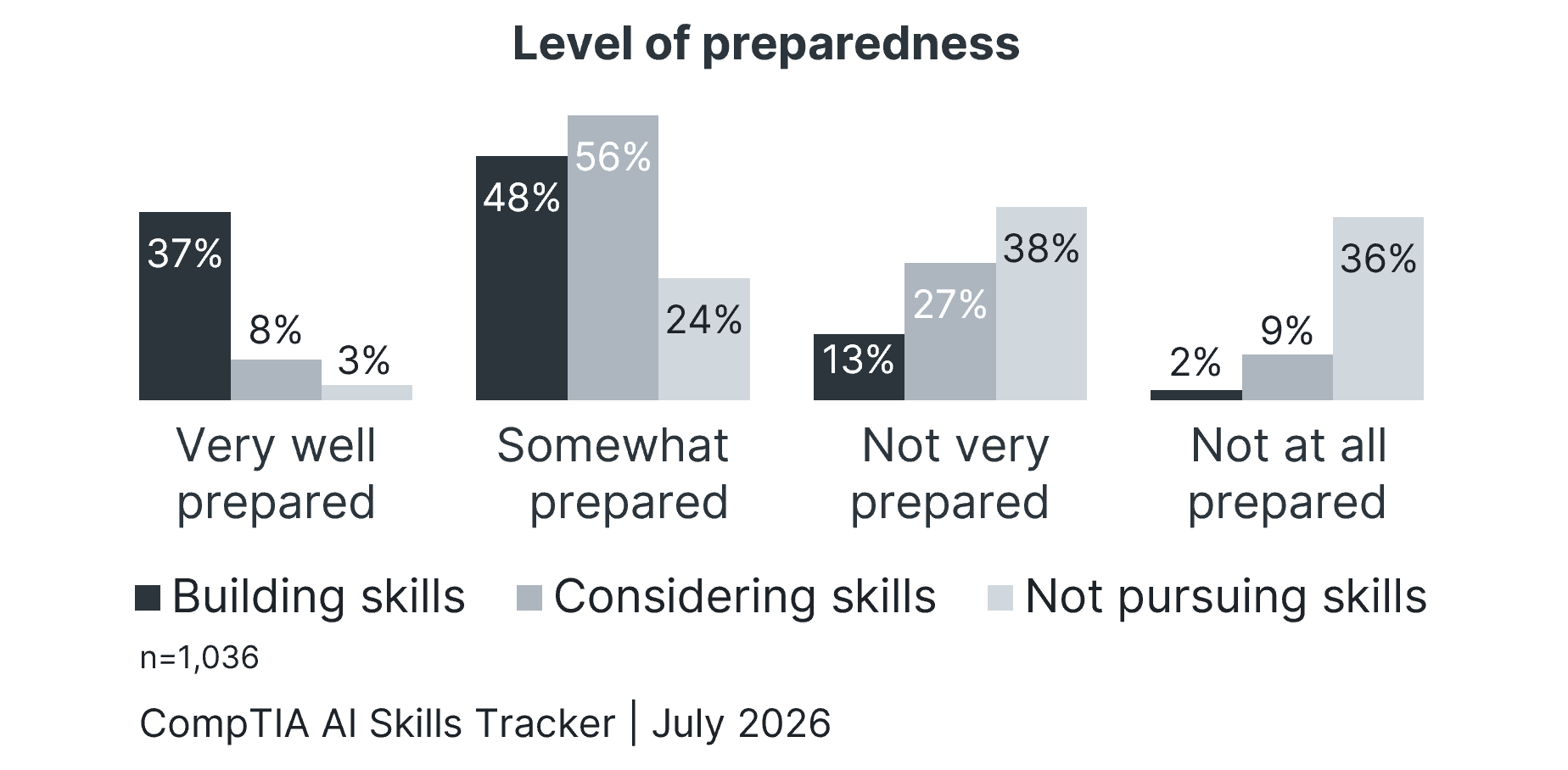
5. スキル開発(Skill Building)
これまでのAI学習は、主にAIの基本概念、安心・安全な利用方法、そしてAIとの対話方法に重点が置かれてきました。
学習に取り組んだ人々の内容を見ると、個人的な知識の習得と業務に関する知識の習得が混在しており、AIを職場や業務の中でどのように活用できるのかについて、依然として明確な理解が十分に浸透していないことがうかがえます。
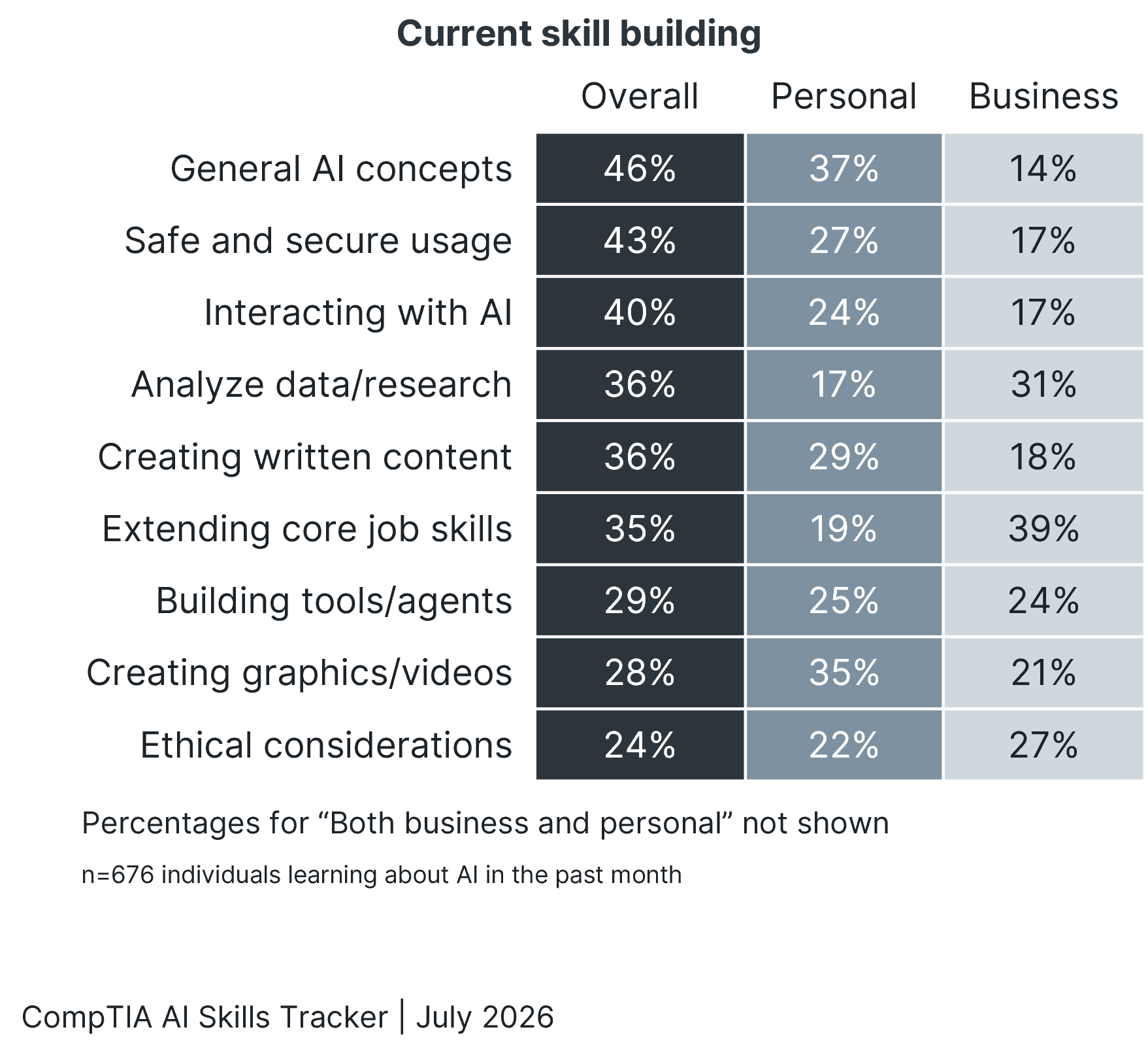
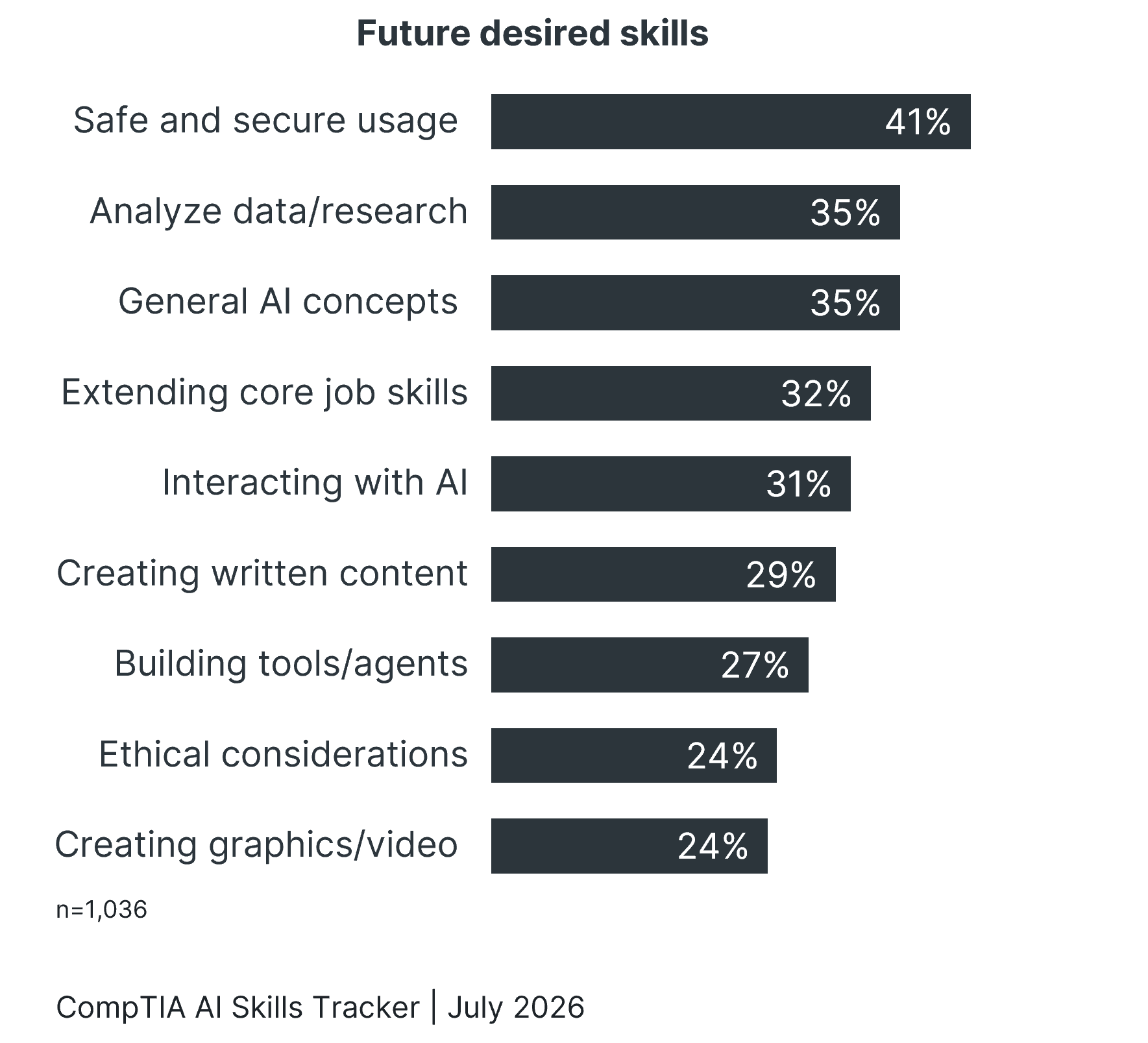
今後の学習分野として特に注目されるのは、セキュリティとデータの2つです。AIとこれらのスキル領域との関わり方は職種によって異なります。AI初心者は、既存の業務やスキルを補完する「追加的なツール(アドオン)」としてAIを活用する傾向があります。一方で、経験豊富な専門人材は、AIを自身の専門知識やスキルをさらに「拡張するツール(エクステンション)」として活用していくことになるでしょう。
6. トレーニングの学習経路(Training Pathways)
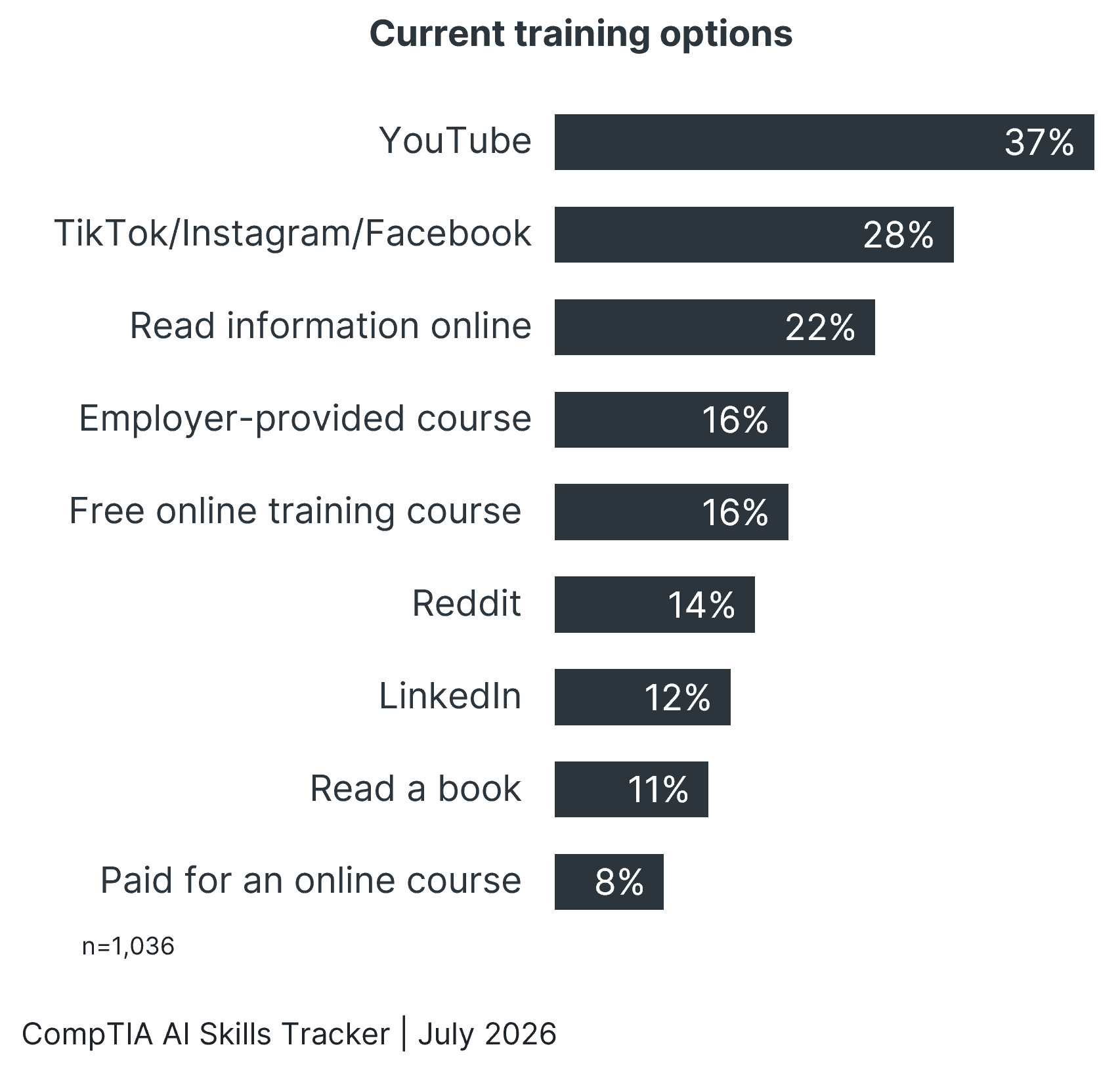
これまでにトレーニングを受講した人の多くは、無料の学習手段を利用しており、そのスキルや知識を客観的に証明する仕組みはほとんどありませんでした。
しかし、学習内容に対してより高い専門性や深い理解が求められるようになる中で、今後のトレーニングは、より体系的で充実したプログラムへと進化していく必要があります。
7. 課題
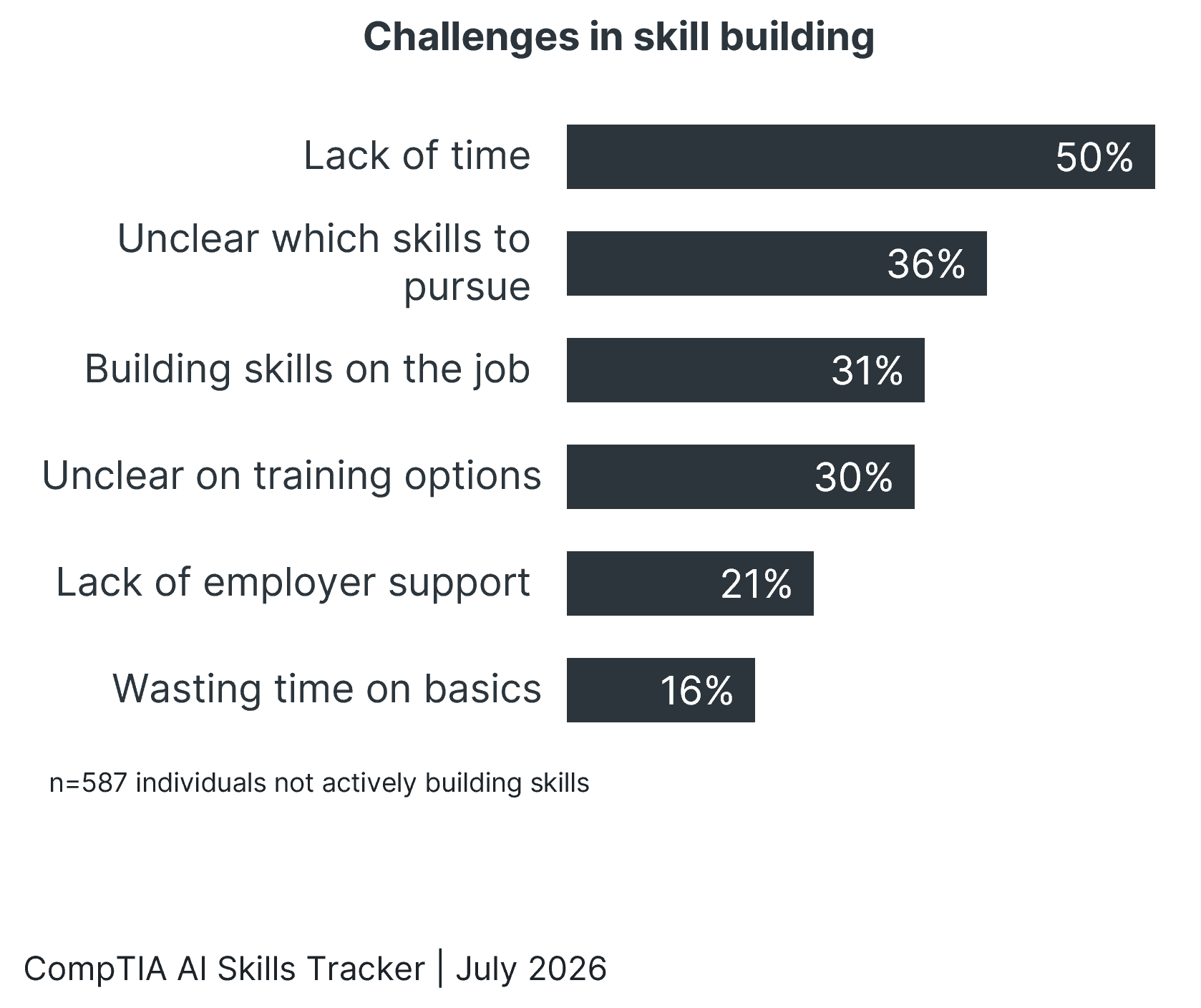
トレーニングのための時間を確保できないことは、個人の選択と企業による支援の狭間にある、長年の課題です。
さらに興味深いのは、2つ目の障壁である「どのスキルが重要なのかが明確でないこと」です。AIの技術革新は非常に速いペースで進んでおり、企業においてもAIをどのように業務へ統合すべきか模索が続いています。そのため、長期的な成功に必要なスキルが何であるかを見極めることは容易ではありません。
個々の職務との関連性は、AIによってどのように業務プロセスが変わるのかという定義と密接に結びついています。 企業がAIを組み込んだ新たな業務プロセスを確立するまでは、日常業務におけるAIの活用方法は流動的であり続けるでしょう。
また、業界で認知された認定資格に対する評価が低いことも、企業側の取り組みに大きく左右されます。 特に重要なのは、認定資格をスキル体系に紐づけ、どのスキルを証明するものなのかを明確に位置付けることです。
調査方法
CompTIA AI Skills Tracker は、2026年6月にオンラインで実施された定量調査を通じて実施されました。合計1,036人のビジネスおよび技術専門家が調査に回答し、標本誤差の代理範囲は95%信頼で+/-3.1ポイントとなりました。データやセグメンテーションのサブセットは、推定されるサンプリング誤差率が高くなります。
どのような調査においても、サンプリング誤差は存在し、データセットのサブセグメントでは高くなります。非標本誤差は正確に計算できませんが、調査設計、収集、データの処理のすべての段階でその影響を最小限に抑えるための予防措置が講じられています。
CompTIA, Inc.は市場調査業界のInsights Associationのメンバーであり、国際的に評価の高い基準を遵守しています。調査に関するご質問は、 research@comptia.org のCompTIAリサーチ&マーケットインテリジェンススタッフまでお問い合わせください。
CompTIAについて
CompTIA, Inc.は、情報技術(IT)分野におけるベンダー中立のトレーニングおよび認証製品の世界リーディングプロバイダーです。現在および志望する技術労働者、ビジネスプロフェッショナル、政府および軍関係者、キャリアチェンジ者、学生などに400万件以上のCompTIA認定が授与されています。数千の学術機関、政府、研修提供者、労働力開発団体と連携し、CompTIAは最高水準の学習ソリューション、業界認定資格、キャリアリソースを活用し、求職者が潜在能力を最大限に発揮し、雇用主が熟練した技術人材を育成できるよう支援しています。
CompTIA リサーチについて
Seth RobinsonはCompTIAのリサーチ部門のVPで、市場調査を監督し、労働力動向や技術導入に関する洞察を提供しています。
Amy CarradoはCompTIAの労働力および内部調査のシニアディレクターであり、テック人材向けのデータ定義を作成し、テックキャリアの分析を推進しています。
Anna MatthaiはCompTIAのリサーチおよびマーケットインテリジェンスディレクターで、調査業務の管理とテック人材のダイナミクスの概要構築を担当しています。