Workforce and Learning Trends: Bridging the Skills Gap to Build a Future-Ready Workforce
Organizations are navigating a workplace defined by rapid shifts in technology, employee expectations, and the skills needed for success. According to CompTIA’s 6th annual Workforce and Learning Trends study, employers around the world are making workforce development a top priority, with particular focus on upskilling, reskilling, and credentialing to help teams stay ahead.
This year’s research, based on input from over 1,100 HR and L&D professionals across multiple countries, highlights how much talent management is evolving to emphasize ongoing learning and skills validation. The majority of respondents from Australia, Benelux, Canada, Japan, South Africa, the UK, and the US agree: Keeping up with change requires a new, more proactive approach to identifying and developing workforce capabilities.
Defining skills gaps
When discussing the “skills gap,” it’s important to recognize the issue is not one-dimensional:
- Skills gaps emerge when current employees lack some of the skills their roles now demand—frequently driven by new technologies or business priorities.
- Skills shortages appear when there simply aren’t enough qualified candidates available in the talent pool, especially for roles in cybersecurity, AI, and other high-demand areas.
- Skills mismatches occur when talented individuals’ expertise doesn’t align with what their organization needs most at the moment.
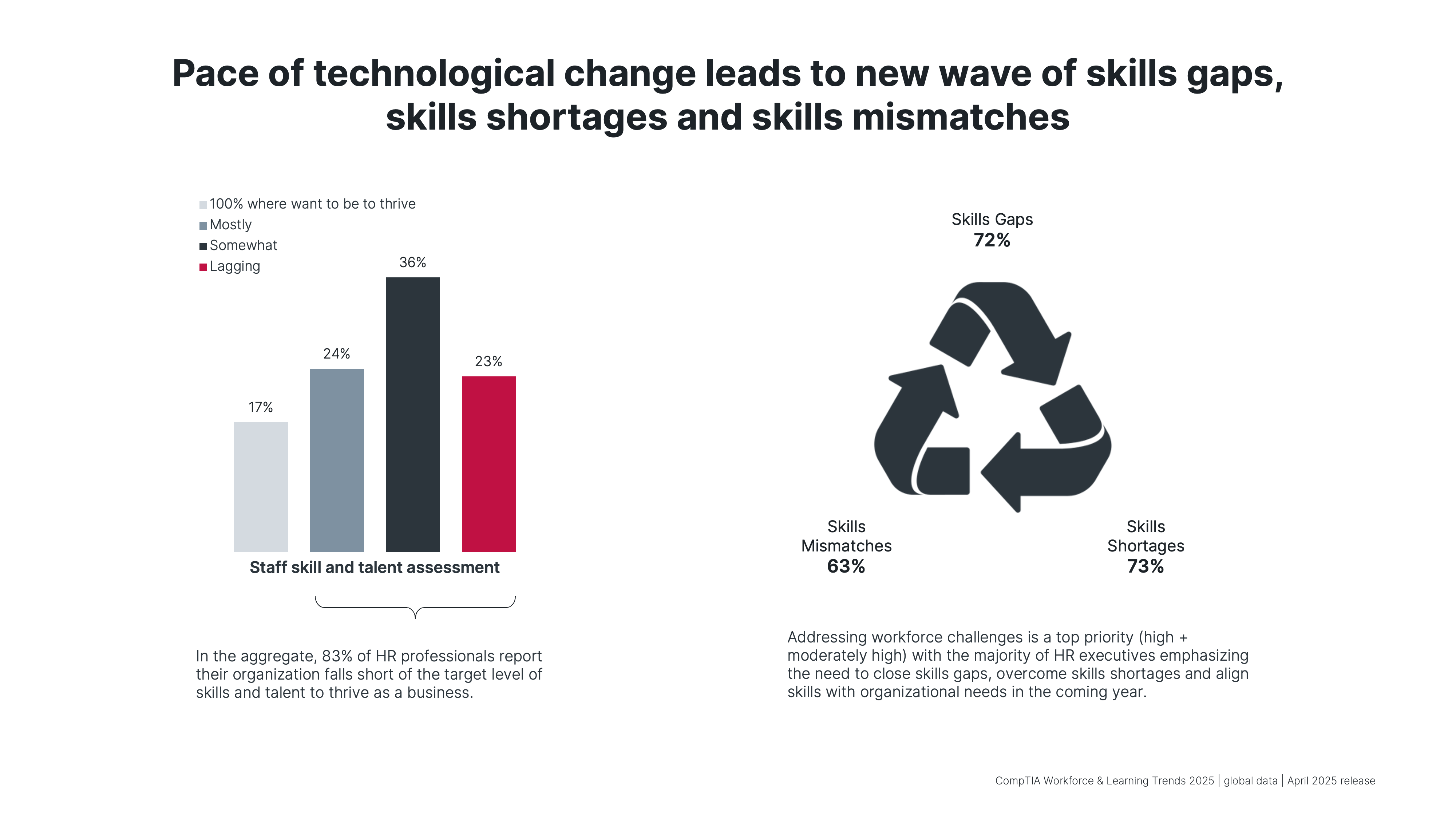
Nearly 8 in 10 employers in our international survey reveal that addressing these gaps is a major strategic goal (79% net). Furthermore, about 9 in 10 report that industry-recognized certifications play an important role in technology hiring, serving as a trusted measure of job-ready capability (91% net).
What’s shaping workforce strategies in 2025?
Several key themes are top-of-mind for employers and L&D leaders:
- Unprecedented pace of change: With technology evolving faster than ever, skill-building and adaptability are essential for teams at every level.
- The pace of technological change ranks as the #1 factor across the globe contributing to skills gaps and talent shortages.
- Certifications carry weight: HR teams are placing greater emphasis on certifications, both for hiring new talent and advancing existing employees.
- For instance, 94% net HR leaders place high importance on validating employee skills and learning through an assessment, such as industry-recognized certifications.
- Empowerment with structure: Many businesses are encouraging employees to take more ownership in driving their own growth, yet also recognize the need for guidance to avoid information overload or missed opportunities.
- Over half of HR departments expect spending on training and development to increase in the year ahead (54%), especially among small- and mid-size firms compared to their larger counterparts.
- AI’s growing impact: Artificial intelligence is increasingly shaping how organizations deliver, track, and assess learning—yet it also raises important questions about balance and best practices.
- AI is the top skills domain where employers plan to increase training investment, followed by cybersecurity and data analytics.
- Rising bar for digital fluency: It’s no longer enough to have basic digital literacy; investment in advanced digital areas like AI, cybersecurity, and analytics is now critical.
- While already important, employers across countries indicate digital fluency skills are becoming even more important (83% net) in the face of rapid technological and other changes.
Transforming investment into opportunity
Looking ahead, most organizations expect to increase or maintain their investment in training and workforce development. Besides the usual “more budget,” the research identifies several key steps HR leaders believe help to keep training on track with desired outcomes, such as setting aside time for training and professional development, better data-driven tools to identify and tailor training and development, and more innovative approaches to developing skills and competencies, among other practices. As such, structured approaches to identifying and closing skills gaps—including industry-recognized certifications—are now a core element of many talent strategies.
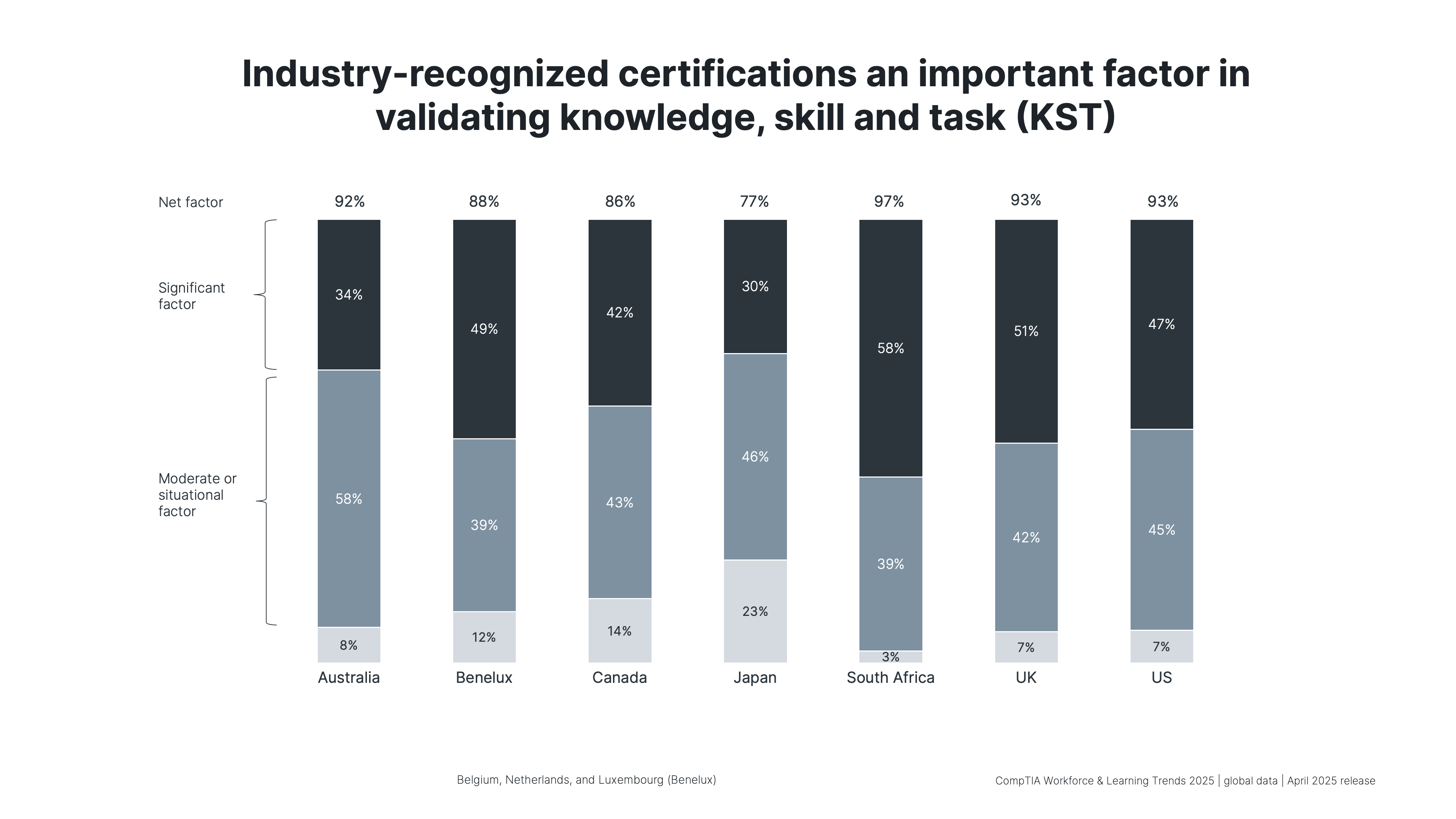
AI training is now at the top of the agenda for many organizations, yet strong attention remains on cybersecurity, data analytics, and the range of foundational tech skills needed to meet business demands. With so many critical areas demanding investment, employers are looking for reliable, standardized ways to ensure skills are current and relevant. Reflective of this, 93% net of HR professionals say validating technical learning and skills through certifications is essential, and most also factor certifications into their hiring processes for tech roles.
The impact of these efforts emerges in individual career stories. As one systems engineer shared: “CompTIA A+, Network+, and Server+ were very foundational for my career. I had worked in IT for years and understood a lot about troubleshooting, yet going through these courses solidified everything I had learned and filled in essential gaps in my understanding that helped me move up to better positions over the years.”
Ultimately, bridging today’s skills gaps requires ongoing commitment—both from organizations, who must keep pace with change, and from individuals, who are looking to grow and adapt. When workforce development is treated as a continuous investment, the result is a more agile organization and a more empowered workforce.
To learn more about these trends and their impact, download CompTIA’s Workforce and Learning Trends report or visit CompTIA’s comprehensive research library, including insights from job seekers, IT professionals, community college students, and more.