
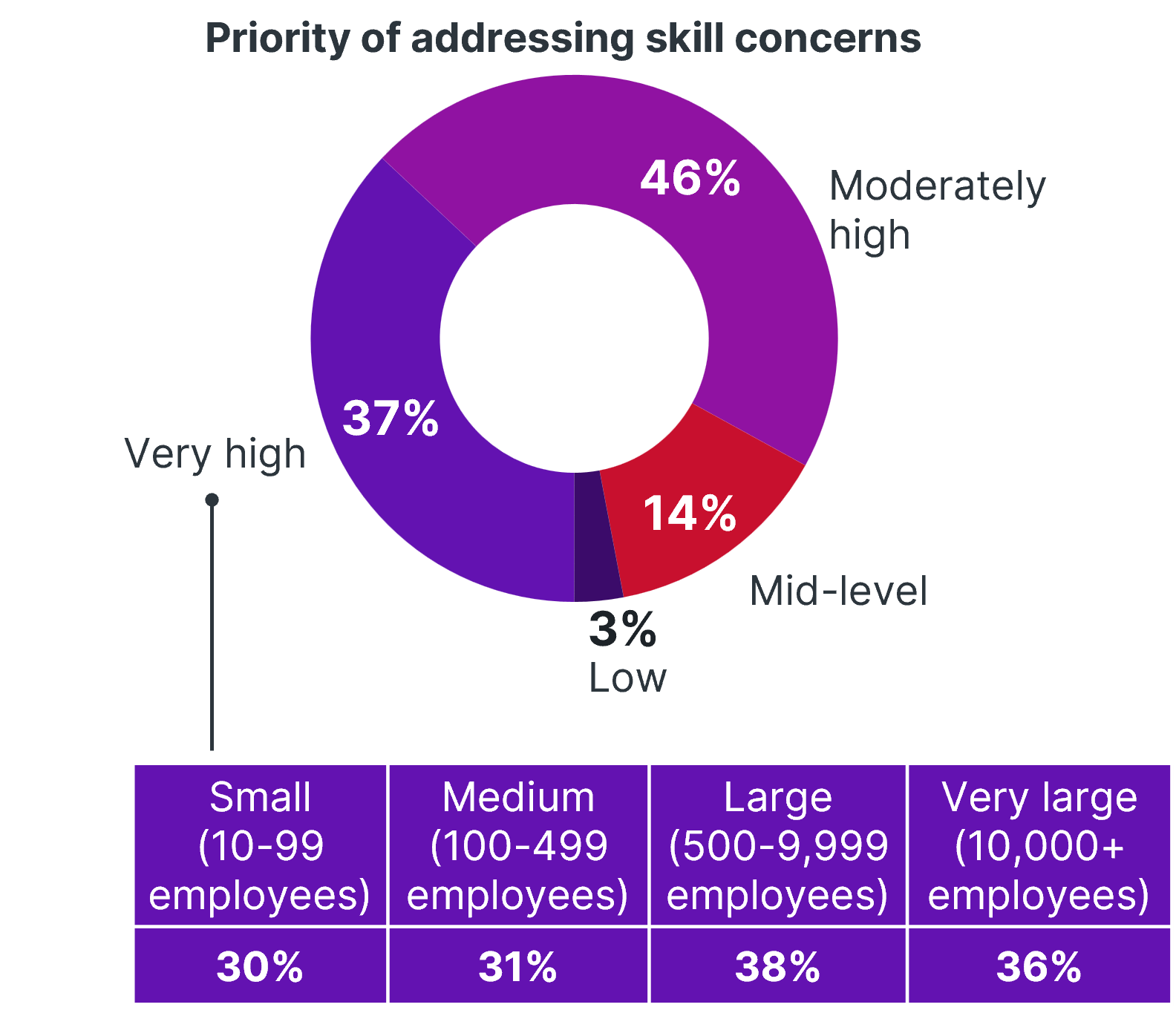
Organizations placing a very high or moderately high priority on addressing skill concerns
Today’s professional skill landscape is defined by two forces. First, uncertainty is causing hesitation and confusion as employers and employees sort through the impacts of AI, changing demographics, and economic turmoil. Second, and more importantly, the demand for productivity has never been higher. Companies were already struggling to maximize their ability to reap benefits from digital transformation; now the pace of change—and the risk of falling behind—has accelerated.
CompTIA’s 7th annual Workforce and Learning Trends examines workforce development issues from the perspective of both HR professionals and IT leaders. These two groups have different tactics but are aiming for the same objective: building a future-proof workforce that drives business results.
Achieving this objective requires organizational change to attitudes and practices around workforce development. The process of finding new talent, improving skills over time, and retaining a stable workforce is one that comes with many challenges, but also one that leads to long-term success even as new technology trends emerge.
2026 Trends
- Building skills is a top-tier business priority
- AI is a key driver but not the only factor in skill gaps
- Workforce development is driven by productivity, retention, and engagement
- Shifting to skill-based development approaches is a complex process
- Credentials play a critical role in achieving development outcomes
Let's talk workforce development
Have questions about the research?
Connect with a CompTIA expert to discuss the Workforce and Learning Trends 2026 findings and learn how certifications and training can help close skill gaps in your organization.
Key Stats
83%
62%
HR professionals and IT leaders who expect the budget for AI training to increase in the next year
80%
HR professionals and IT leaders who believe that skill gaps are at least partially driven by technology factors other than AI
#1
Rank of job role-based training as a current format for AI education
83%
Organizations expecting skill development to have a high or moderate degree of impact on employee morale and engagement
97%
HR professionals and IT leaders who say that certifications play an important role in validating workforce training programs
1. Building skills is a top-tier business priority
- Both HR professionals and IT leaders place a high priority on skill development
- The pace of technology changes and the availability of skilled candidates are the main drivers for development programs
- Training budgets for several technical skill domains are expected to increase over the next twelve months
The first thing that HR professionals and IT leaders agree on is that skill improvement is imperative for their organizations. A net 83% of individuals surveyed said that their firm places a very high or moderately high priority on addressing skill concerns, with 41% of HR professionals and 33% of IT leaders ranking the priority as very high. By firm size, the largest companies are more likely to place a higher priority, since there are a higher number of employees where skill improvement will scale to greater productivity.
While HR leaders in particular may be concerned about the full range of skills across the workforce, digital skills are among the most targeted skills for development. Digital transformation has increased the need for digital fluency across every job function, and the emergence of AI has added AI fluency to the list of foundational acumen included in this category. Those same trends have driven more focused demand for core skills and advanced skills among technical staff.
HR professionals and IT leaders also agree on the main factors driving skill gaps and the need for strong development programs. The top factor is internal, as AI accelerates technological change and amplifies the need to stay on the leading edge with skills. The second factor is external, as the availability of skilled professionals continues to fall short of demand. The key question for the future is how these two factors will play together. Will AI and automation eventually reduce demand? If so, how will that change the mix of skills needed? Regardless of the answers, the ability to quickly build the skills needed will remain a key differentiator for competition and growth.
The simplest way to determine priority in business settings is to inspect budget plans. There are a variety of ways that organizations define budgets for development. Nearly half the sample (46%) say that development budgets are primarily part of HR/L&D, with slightly less (43%) saying that these budgets primarily sit with individual departments. A small segment (10%) say that development budgets primarily come through grants or outside funding.
One notable difference between HR professionals and IT leaders is around the viewpoint that development budgets are part of HR budgets without being specifically carved out. Nearly 1 in 3 HR professionals believes this to be true, compared to only 19% of IT leaders. Clearly there is a disconnect in communication around funding that is available for skill building.
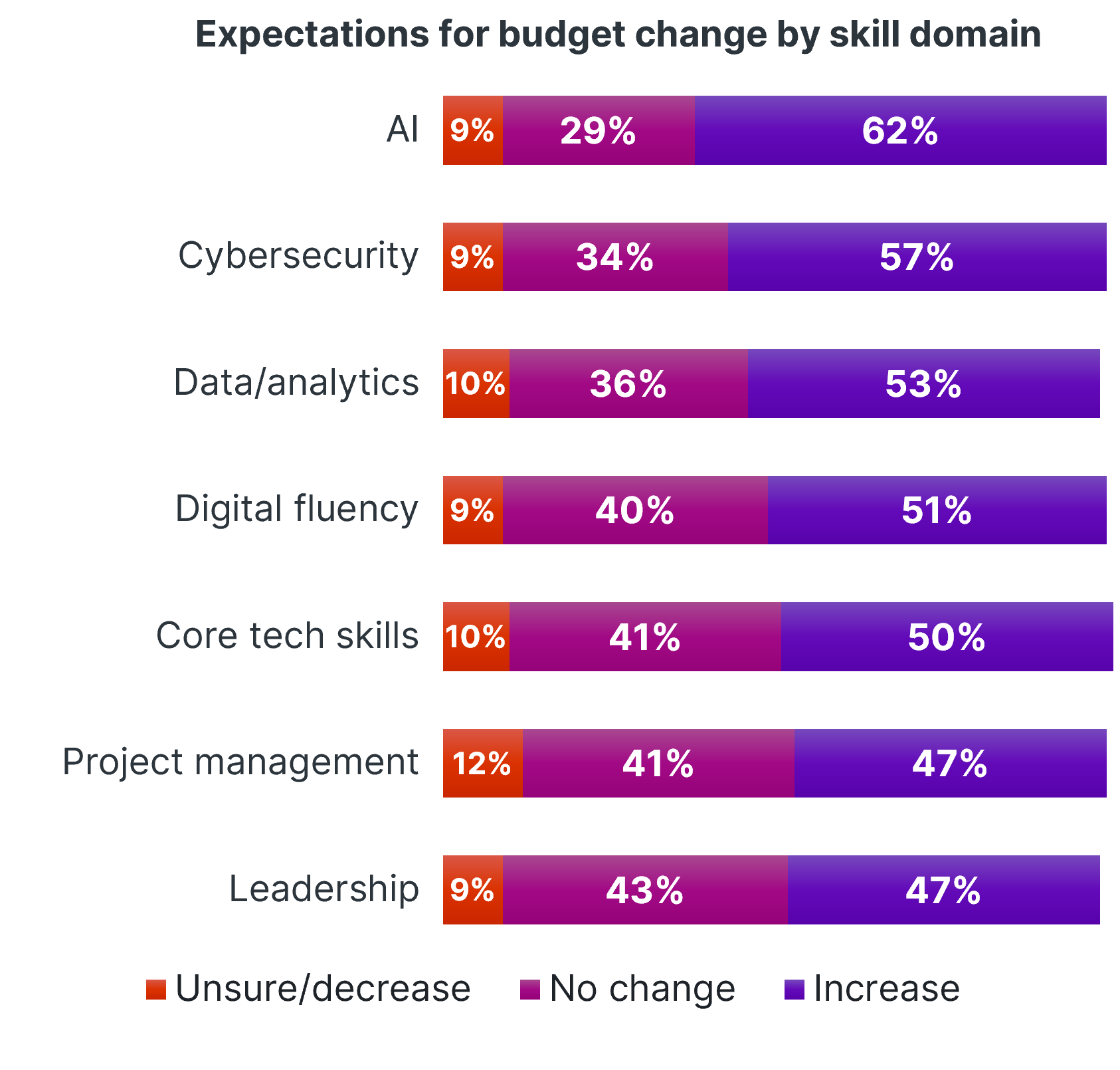
Looking forward, the plans around budget for training in individual skill domains underline the importance of digital skills. Upskilling in AI and digital fluency is a need for the entire workforce, while cybersecurity, data, and core tech skills are
more of a concern for technical teams. IT leaders are slightly more likely than HR professionals to project increased budget for cybersecurity and data, but the strong forecast across all these areas indicates an appetite for robust offerings with quantifiable outcomes.
2. AI is a key driver but not the only factor in skill gaps
- Most companies say skill gaps are driven by a combination of AI and other technology changes
- Foundational AI skills across the workforce are the top AI skill demand, followed by extending existing activities
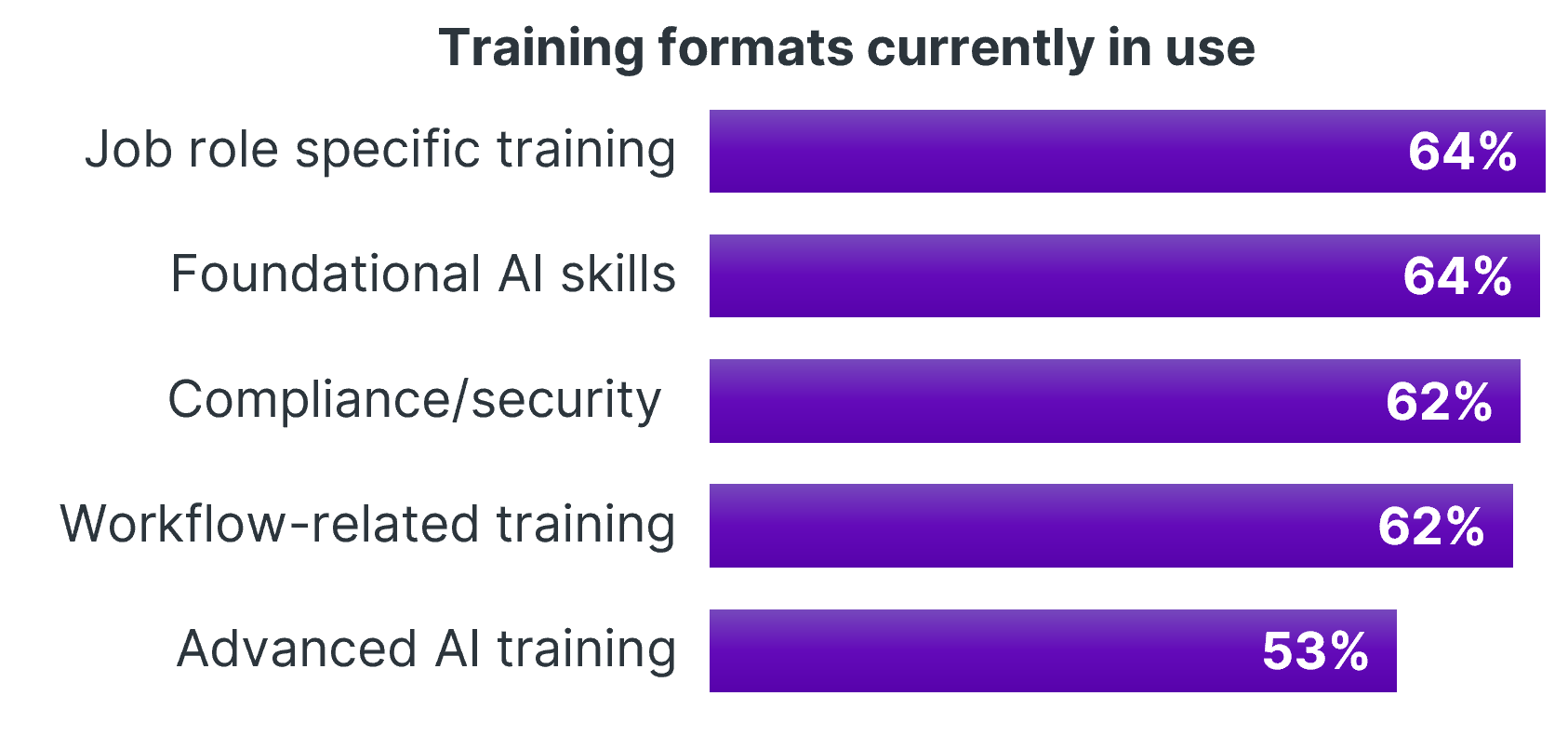
- The top format being used today for AI education is training specific to individual job roles
For over three years, AI has dominated discussions in both the business world and the world at large, and it shows no signs of slowing down. For functional leaders, it is becoming difficult to address other concerns; 36% of HR professionals and 48% of IT leaders say that AI is crowding out other important needs, such as shifting to a skills-based methodology or controlling costs of delivery.
To the extent companies are able to assess their skill gaps, that assessment highlights the risk of focusing exclusively on AI. Across all company sizes, the bulk of skills demands are
perceived to be driven by a mix of AI and other technology changes. A healthy portion of companies view skill gaps to be primarily driven by other technology changes.
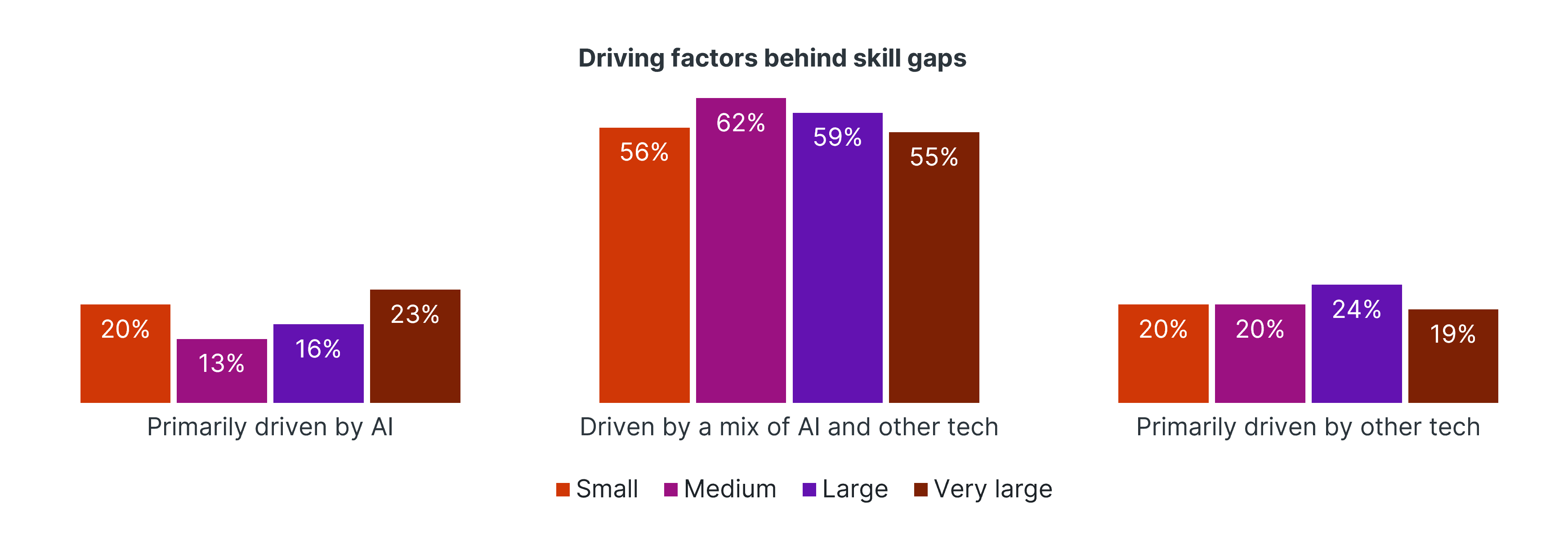
It is easy to lose sight of the fact that AI is best utilized in conjunction with other skills. Whether companies are working to extend individual employee capabilities or attempting to integrate AI into their technology stack, a myopic emphasis on AI will lead to insufficient skill development. A broader approach is needed to ensure optimal productivity and the best chances for successful workflow transformation.
Organizations recognize that there are a broad range of AI skill domains that apply across different segments of the workforce. AI basics for everyone is the primary need, followed by a tight cluster of domains where AI acts as an extension of existing skill sets. These are the ultimate end goals, with training around AI interaction being the first step in getting there.
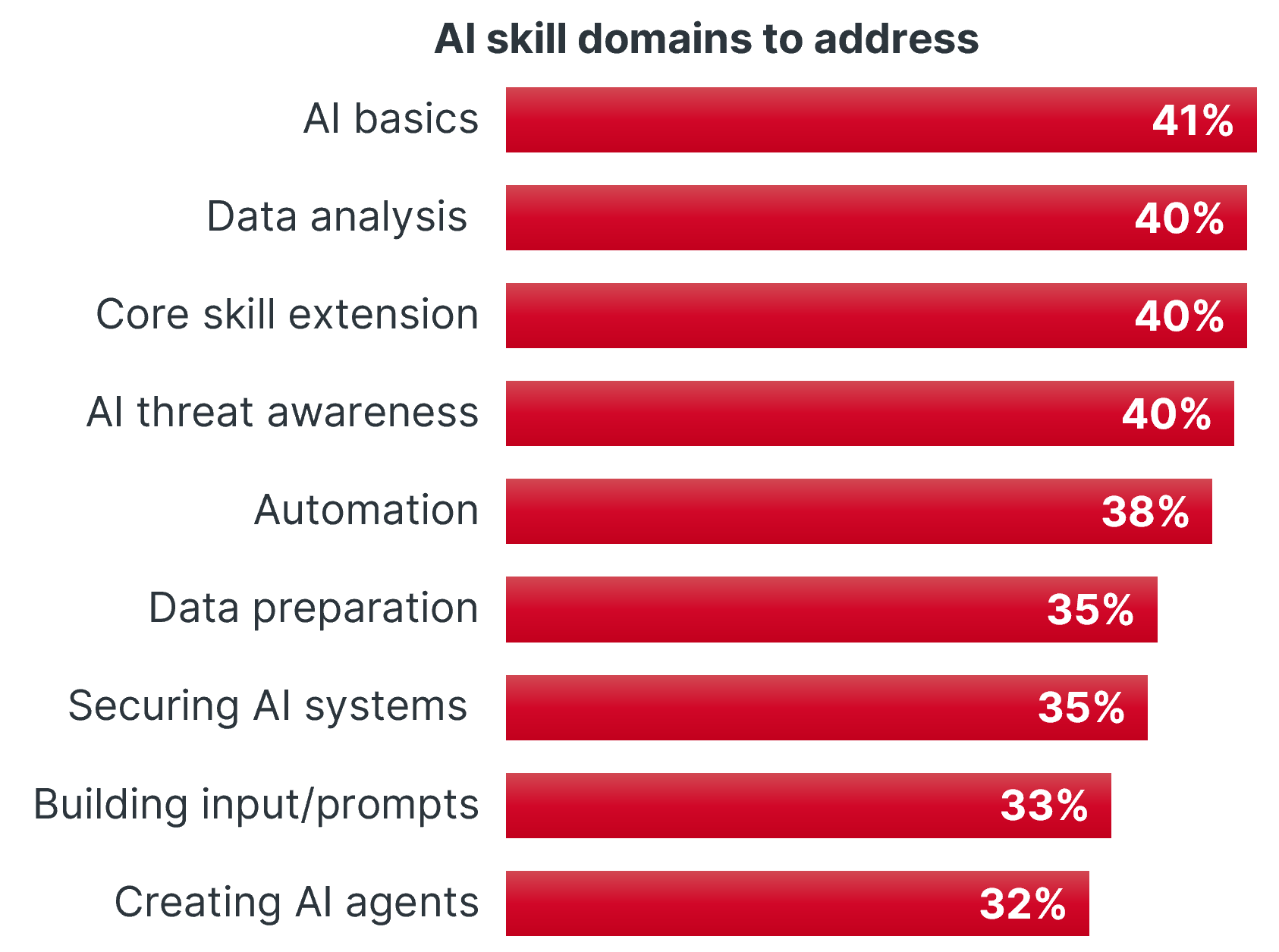
Although AI agents have emerged as the frontier of AI activity, there are other skills that need to be developed before exploring these capabilities. In addition, the exact definition of agent creation and management is under debate as companies form best practices.
In line with the variety of skills being developed, there are a variety of training options being made available to employees. For companies that have taken a piecemeal approach to training curriculum and formats, there will be a growing need to standardize around industry-recognized offerings in order to ensure clarity across departments working on different AI initiatives.
3. Workforce development is driven by productivity, retention, and engagement
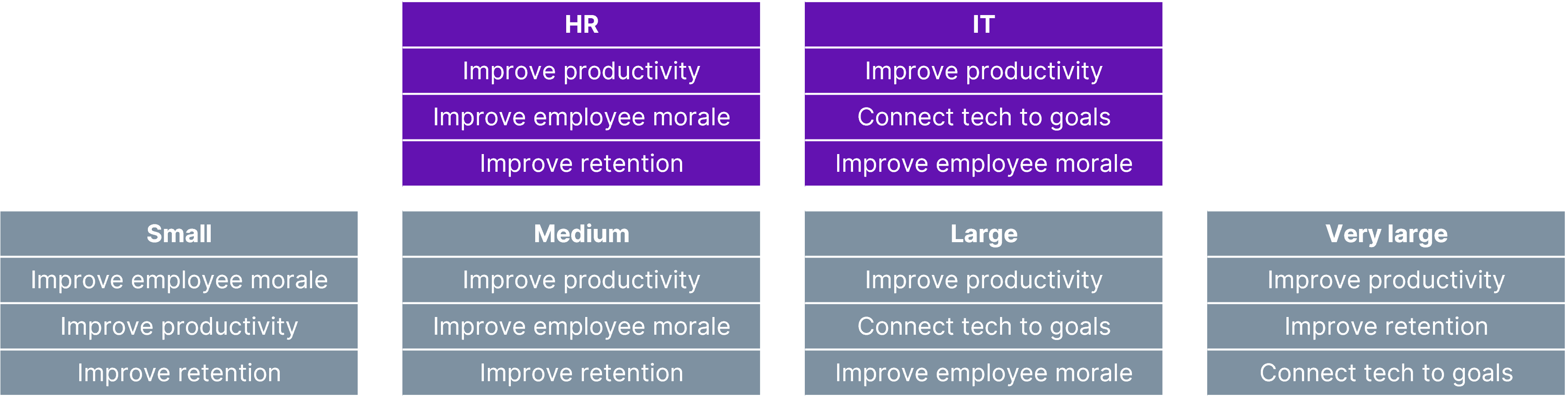
- Productivity is the top driver for workforce development efforts across all segments except small firms
- IT leaders and large enterprises are driven by the need to connect technology to organizational goals
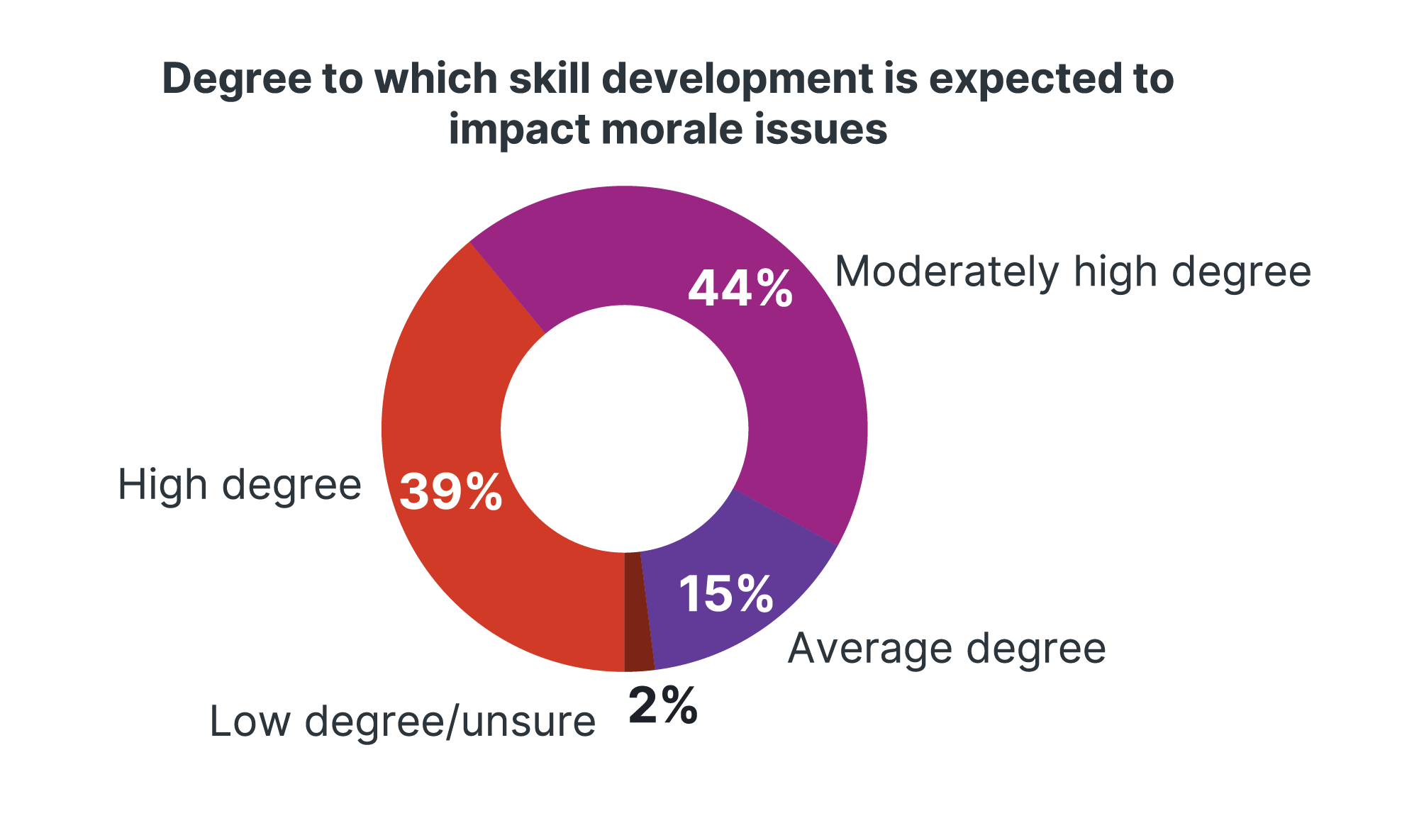
- A majority of companies expect to leverage skill development to a high degree in combatting root causes of low engagement
Productivity is the obvious motivation for developing skills, and in fact it ranks as the top motivation for nearly every segment of the sample. The lone exception is small businesses, where a tight-knit culture may often be a higher priority depending on the ownership structure.
Beyond productivity, the picture gets more interesting. Those in an HR function are focused on employee engagement and workforce retention, while those in an IT role prioritize their ability to connect technology activity to organizational goals. The ordering is not a surprise, but when considering where budgets are held, it may alter the composition of a development strategy.
The breakdown by company size also highlights how development programs might be evaluated and implemented depending on the scope and growth goals of the organization. Small and medium companies are focused more on workforce implications, working to ensure that employees are not only
productive but also feeling strongly connected to the business. At the enterprise level, there is more emphasis on connecting technology initiatives (which are more complex) to goals (which are more far-reaching).
Along with direct challenges that companies face when implementing a workforce development strategy, these varying motivations present an indirect challenge. Measuring productivity gains is difficult enough, but measuring the impact of training across several different vectors is even more complicated.
Digging deeper into the factors that contribute to low performance or flight risk, companies are contending with a workforce that reflects an anxious society. Although the Covid pandemic itself is well in the rear-view mirror, the aftershocks continue to be felt as events such as supply chain disruption, rising interest rates, and geopolitical tensions have steadily driven economic uncertainty. More recently, the emergence of AI has combined with a retreat from post-pandemic hiring to create a tighter labor market, adding to employee concerns.
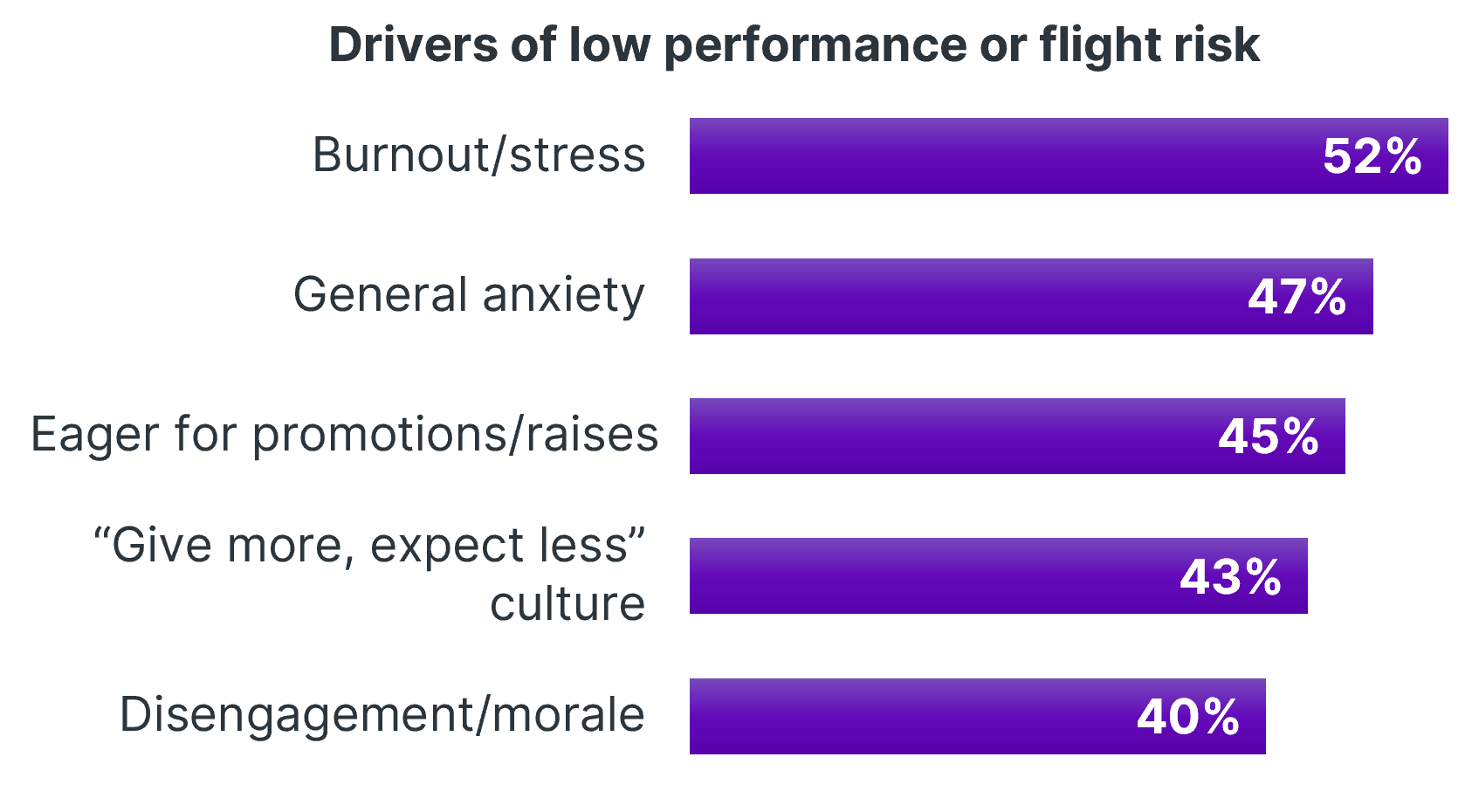
Burnout is often cited as a common malady for tech workers, especially cybersecurity professionals who are often required to respond quickly to malicious behavior. However, the data shows that HR professionals are actually more concerned about burnout (56%) than IT leaders (46%). While technology jobs include a healthy amount of stress, that stress also presents opportunity for problem-solving, which is commonly cited as a prime element of satisfaction in technology careers.
HR professionals and IT leaders are in lockstep when using workforce development programs as a way to combat stress, anxiety, and other ingredients that could lead to low engagement. Especially when combined with a well-defined framework that connects skill building to career advances, a robust development program can demonstrate employer commitment and create a more dynamic culture.
4. Shifting to skill-based development approaches is a complex process
- Skill-based talent programs have been focused on hiring, with only 1 in 3 firms claiming a formal development program for employees
- Relatively few programs include customization, including the critical step of skill assessments
- The top challenge in building workforce development programs is the cost of training, followed by other factors in execution and measurement
Using a skill-based approach for talent acquisition and workforce development has been a common theme for many organizations in recent years. The full potential has not been realized, though, as the adoption process encounters difficulty in implementation.
Only 34% of companies claim to have a formal, organization-wide program for reskilling or upskilling current employees. Most of the skill-based focus has been on the hiring process, where companies have stated goals to move away from degree requirements and broaden their search for candidates. Even that process has met limited results, as dropping requirements has not greatly changed the mix of talent that gets hired.
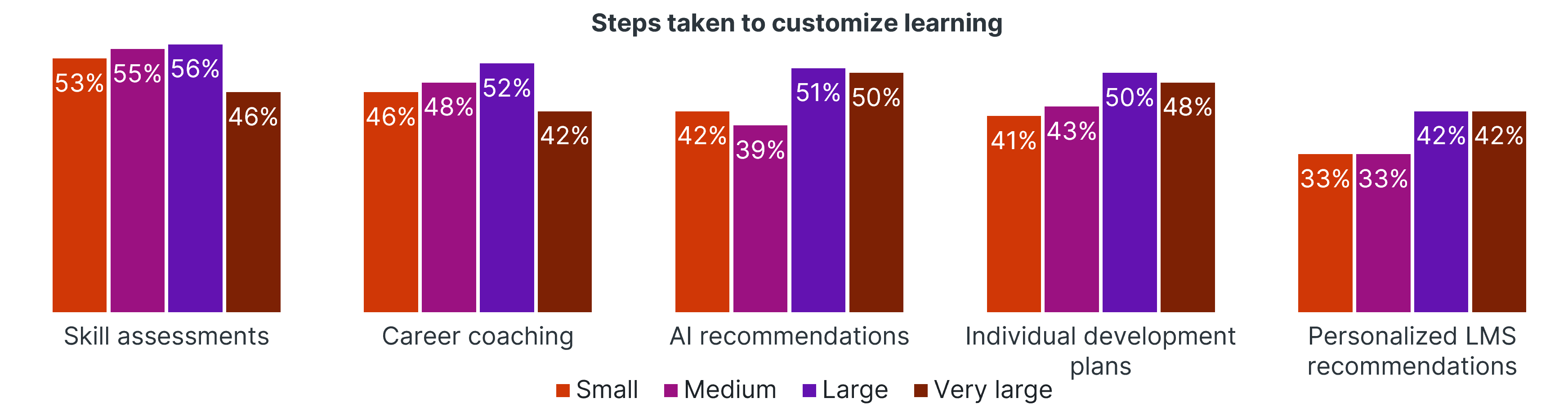
Looking at how companies address their existing workforce, the lack of activity around learning customization suggests that most programs are attacking the skills problem with a wide distribution of training that may or may not solve critical needs. Skill assessments are the most common customization step, but still only performed by 53% of companies over and only 46% of very large enterprises, indicating the high level of difficulty when assessing large pools of workers.
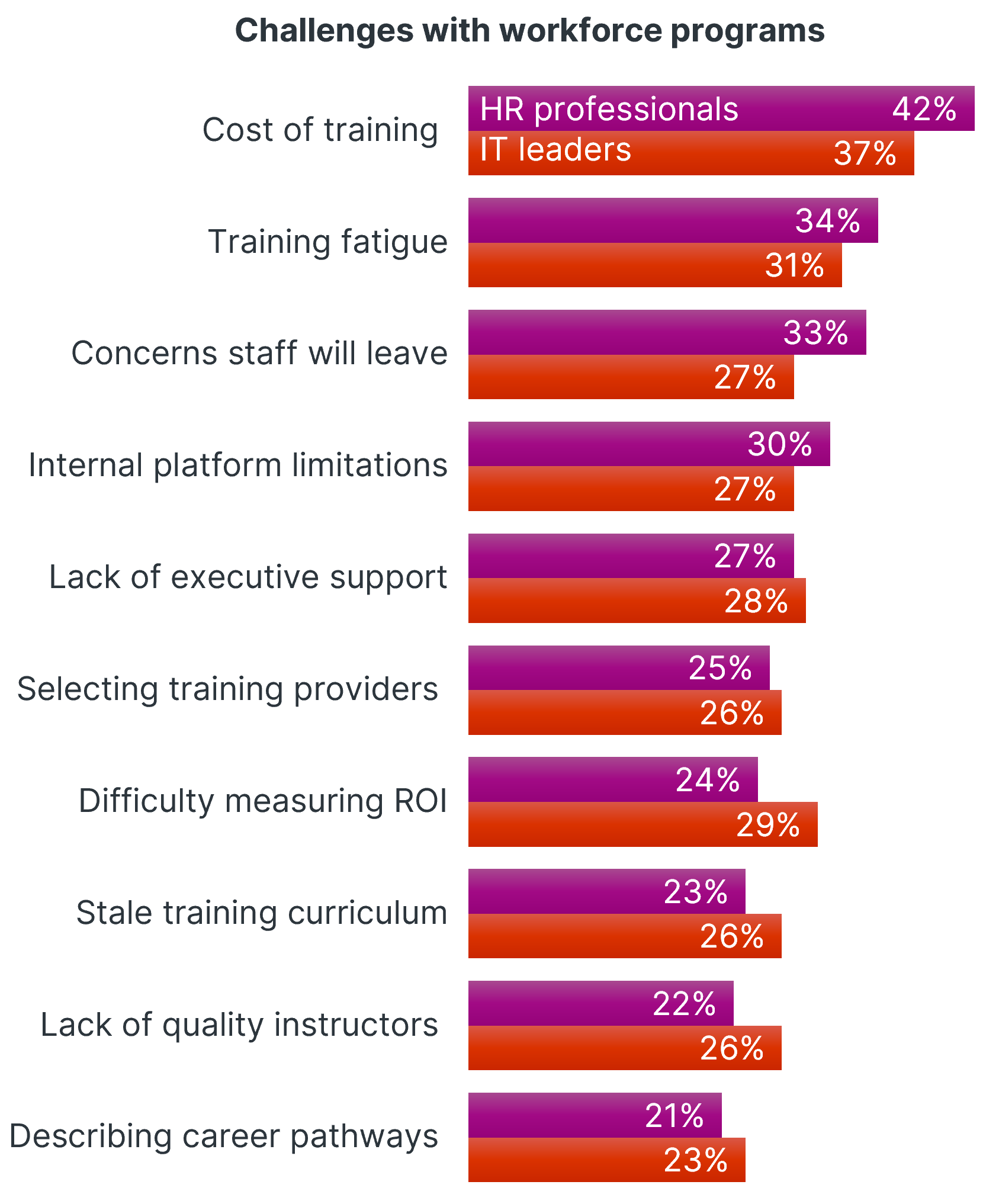
There are not extreme differences between HR professionals and IT leaders when describing the range of challenges that impede workforce development strategies, but the differences that do exist point to opportunities for tailoring training depending on the primary stakeholder. HR professionals are more concerned with cost, as they are likely considering comprehensive programs to cover the entire workforce. HR pros are also more concerned staff will leave, given that workforce retention is more often a key metric for HR teams.
IT leaders are more concerned with the other side of the cost equation, measuring ROI. With a more tightly defined scope of contribution to the business, IT leaders must ensure that training addresses specific gaps in delivery. IT leaders are also more concerned with stale curriculum or the quality of instructors. Technological differentiation increases with the ability to capture cutting-edge innovation, so staying up to date and receiving expert training is of paramount importance.
The top factors leading to technical skill gaps are external: the pace of technical and AI change (50%) and the availability of skilled professional workers (49%). Unfortunately, the next factor is the strength of internal workforce development programs (45%). Without addressing internal capabilities, organizations will be unable to respond to the external pressures that are increasing in scale.
5. Credentials play a critical role in achieving development outcomes
- A growing number of companies are placing high importance on validating skills learned in training
- Most firms say that certifications play a role in evaluating candidates, especially when certs are tied to job roles
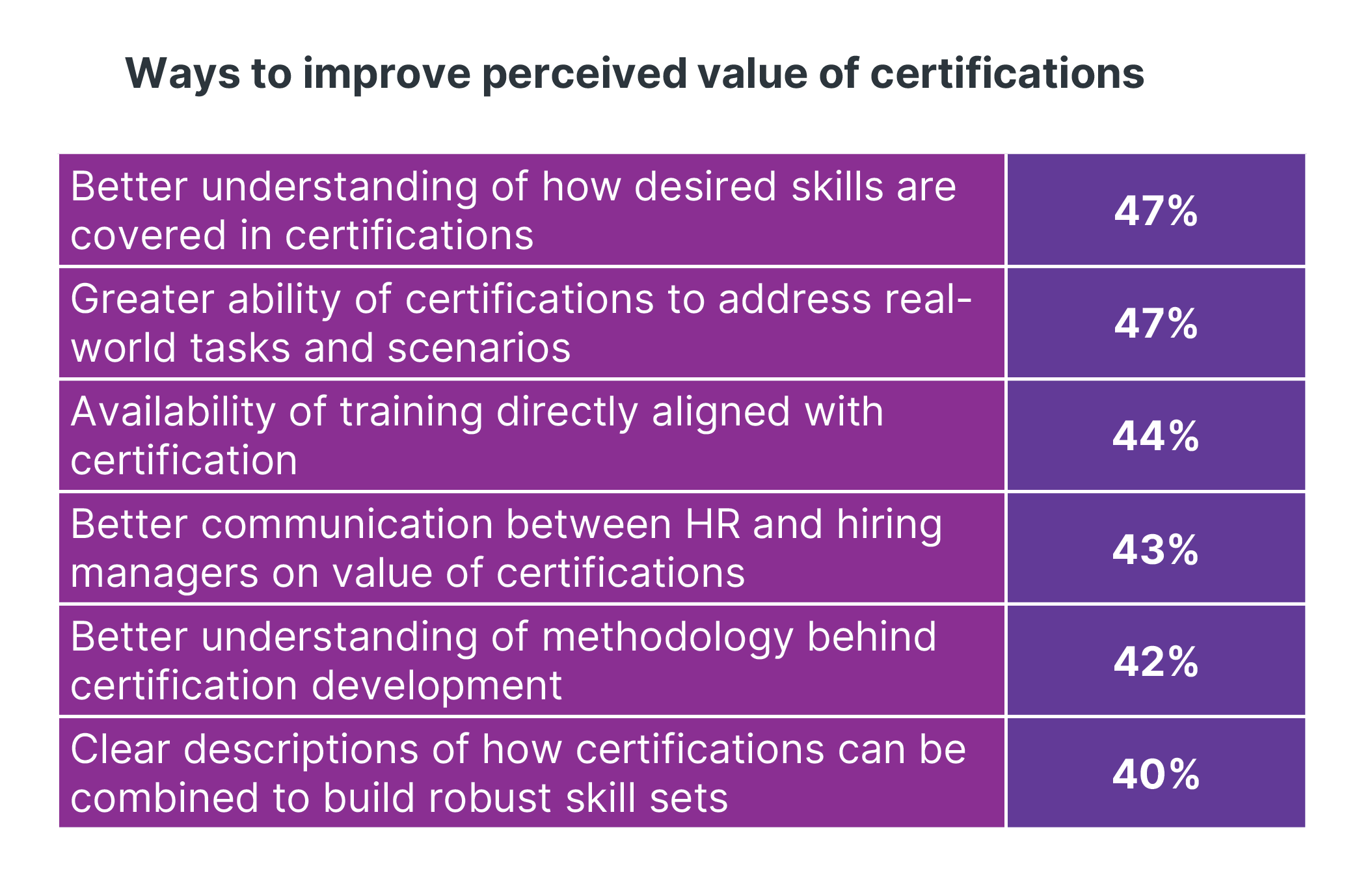
- Certifications could become an even greater factor with more education around cert content and better communication between HR and hiring managers
The ability of workforce development programs to advance skill-based methodologies will be dependent on proof that skills have been attained. In the same way organizations are more closely scrutinizing the ROI of digital transformation, they will begin examining the results of training.
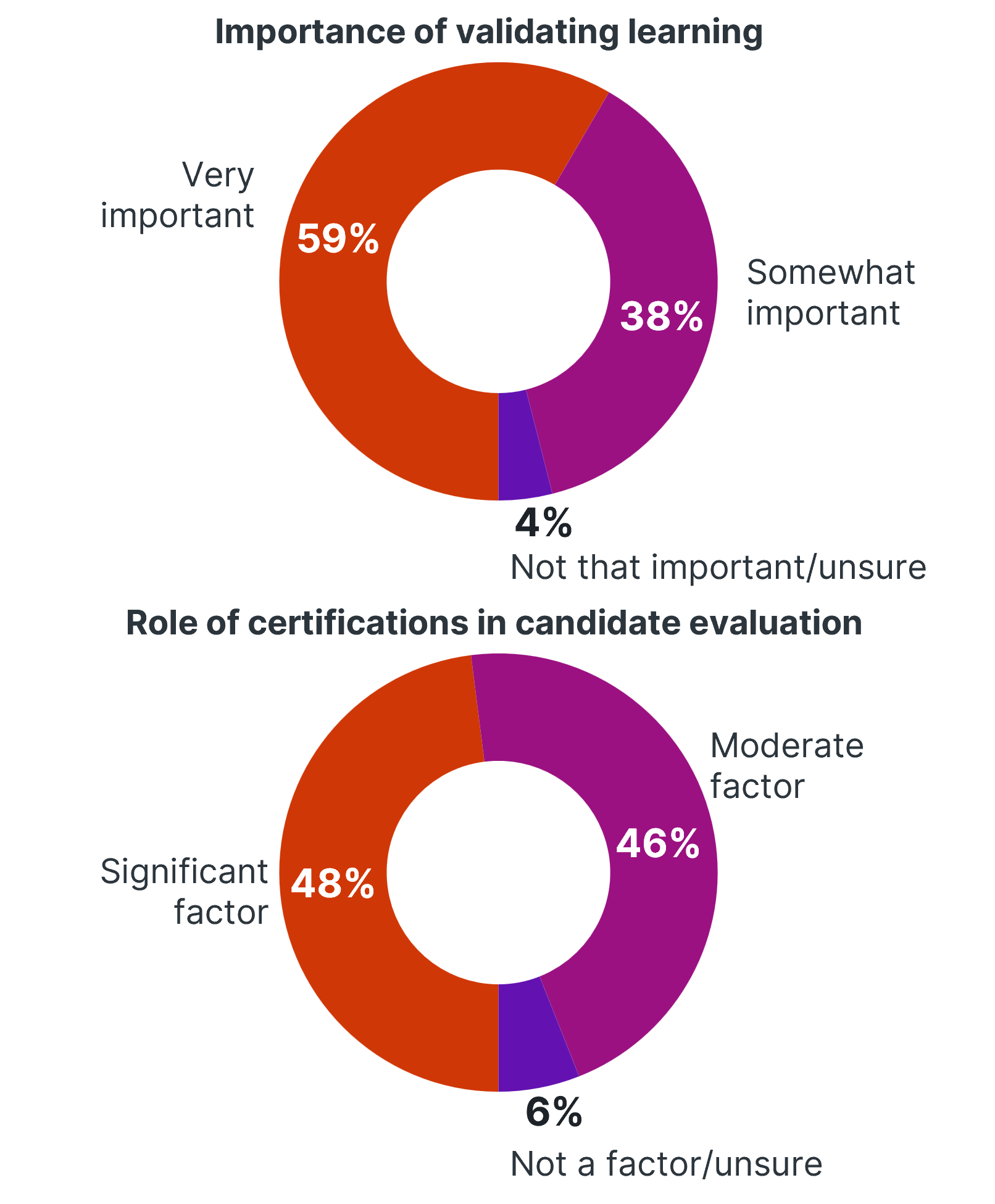
At an organizational or departmental level, managers will have to build the proper metrics around measuring productivity gains. As a first step in validating the efficacy of training, credentials such as industry-recognized certifications can offer evidence that desired skills have been attained. Compared to CompTIA’s Workforce and Learning Trends 2025, the ranking of validating assessments as very important rose slightly, from 56% to 59%. This tracks with the ongoing adoption of skills-based approaches.
The use of certifications as a significant factor in candidate evaluations is also high, though not quite as high as expected given the emphasis on skills-based hiring over the past several years. The primary obstacle here is that four-year degrees have long served as a proxy for a wide variety of skills, and there is a learning curve for replacing that historical credential with a collection of other options. Certifications can do a better job of validating specific technical skills, but durable skills and success with long-term projects require additional signals from a candidate.
As skills-based methodologies continue to develop, the unique benefits of certifications will grow more apparent. Alignment to specific job roles is a key advantage, but it also requires that the organization has built some form of taxonomy around job roles and skills. These taxonomies are also key pieces of skill assessments, which identify the skill gaps in the first place.
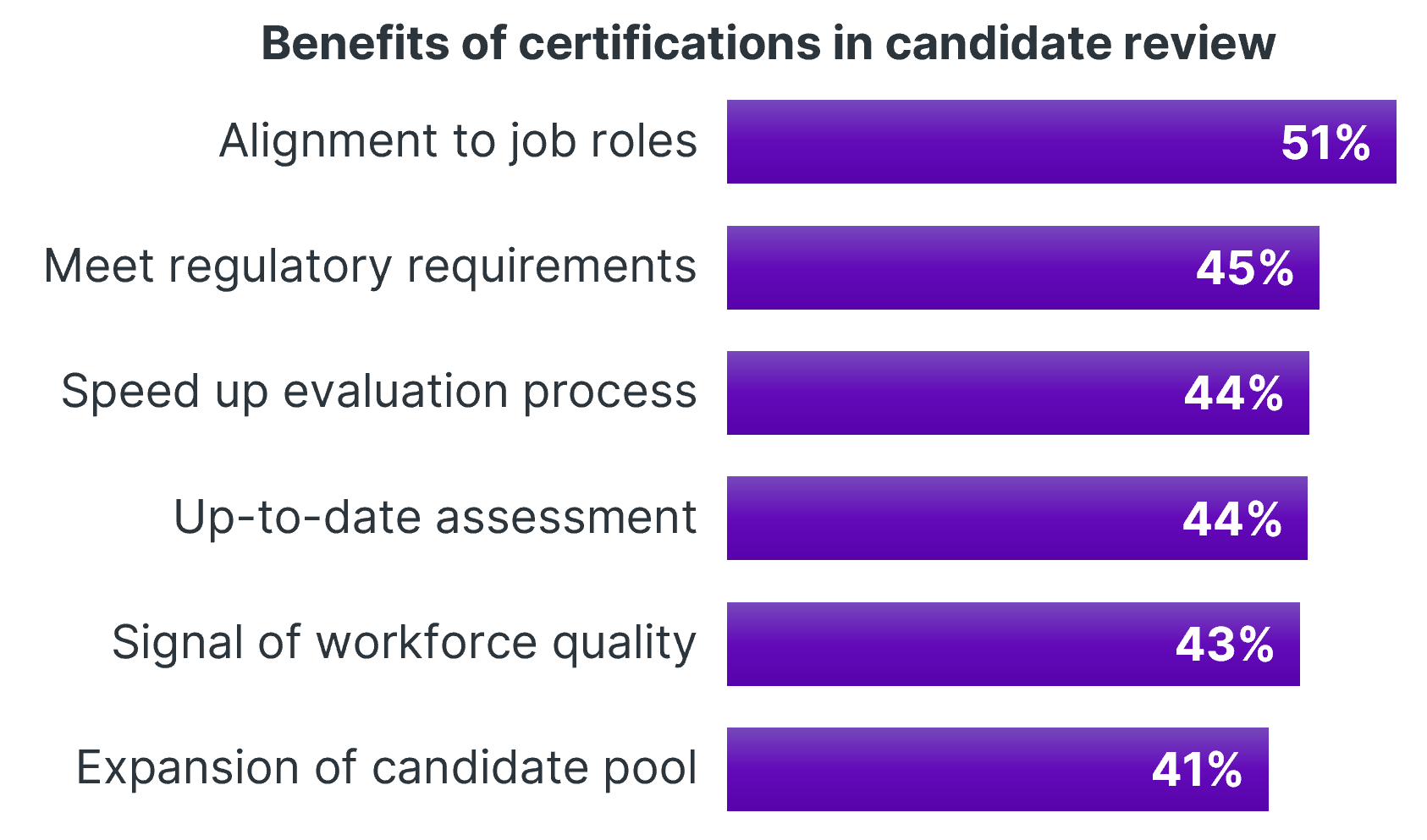
Other benefits line up with the changing business environment. In a growing number of cases, regulations may dictate the presence of certain skills, or the ability to signal workforce quality may become important for partnering and organizational trust. Certified staff act as strong evidence for these needs.
To climb the learning curve of a new set of skill proxies, managers require education. This could be education around the content of certifications, the ecosystem of certifications, or the value of certifications. In a space that has become very crowded with offerings of varying quality, managers need to understand the differentiating factors.
Conclusion
Workforce development has never been more crucial. The basic processes and motivations may be similar to past efforts, but the complexity of the task and the pressure to produce have increased substantially. As seismic changes are disrupting the way work gets done, organizations must respond by giving their employees the skills to adapt.
HR professionals and IT leaders share responsibility for solving the problem. The HR function takes a broad view of defining a skills-based methodology and addressing foundational needs across the full workforce. IT has a more focused mindset, building programs that target specific skills so that they can deliver more value to the business.
Ultimately, these two groups will need to work together to craft holistic skill-based approaches, including proper assessment of skills and the use of credentials to help evaluate incoming candidates and to help validate the skills gained by existing employees. The future, as always, is in flux, but it belongs to those who take the necessary strides forward today.
Methodology
CompTIA’s Workforce and Learning Trends study was conducted via a quantitative survey fielded online during April 2026. A total of 1,049 human resource (HR) and learning and development (L&D) professionals completed the survey, yielding an overall margin of sampling error proxy at 95% confidence of +/- 3.1 percentage points. Subsets of the data and segmentations will have higher estimated sampling error rates.
As with any survey, sampling error is present and will be higher for subsegments of the dataset. While non-sampling error cannot be accurately calculated, precautionary steps were taken in all phases of the survey design, collection and processing of the data to minimize its influence.
For additional trending information, please see the prior year releases of CompTIA’s Workforce and Learning Trends research. Year-over-year comparisons are approximate due to differences in panel provider and respondent audience.
CompTIA, Inc. is a member of the market research industry’s Insights Association and adheres to its internationally respected Code of Standards. Any questions regarding the study should be directed to CompTIA Research and Market Intelligence staff at research@comptia.org.