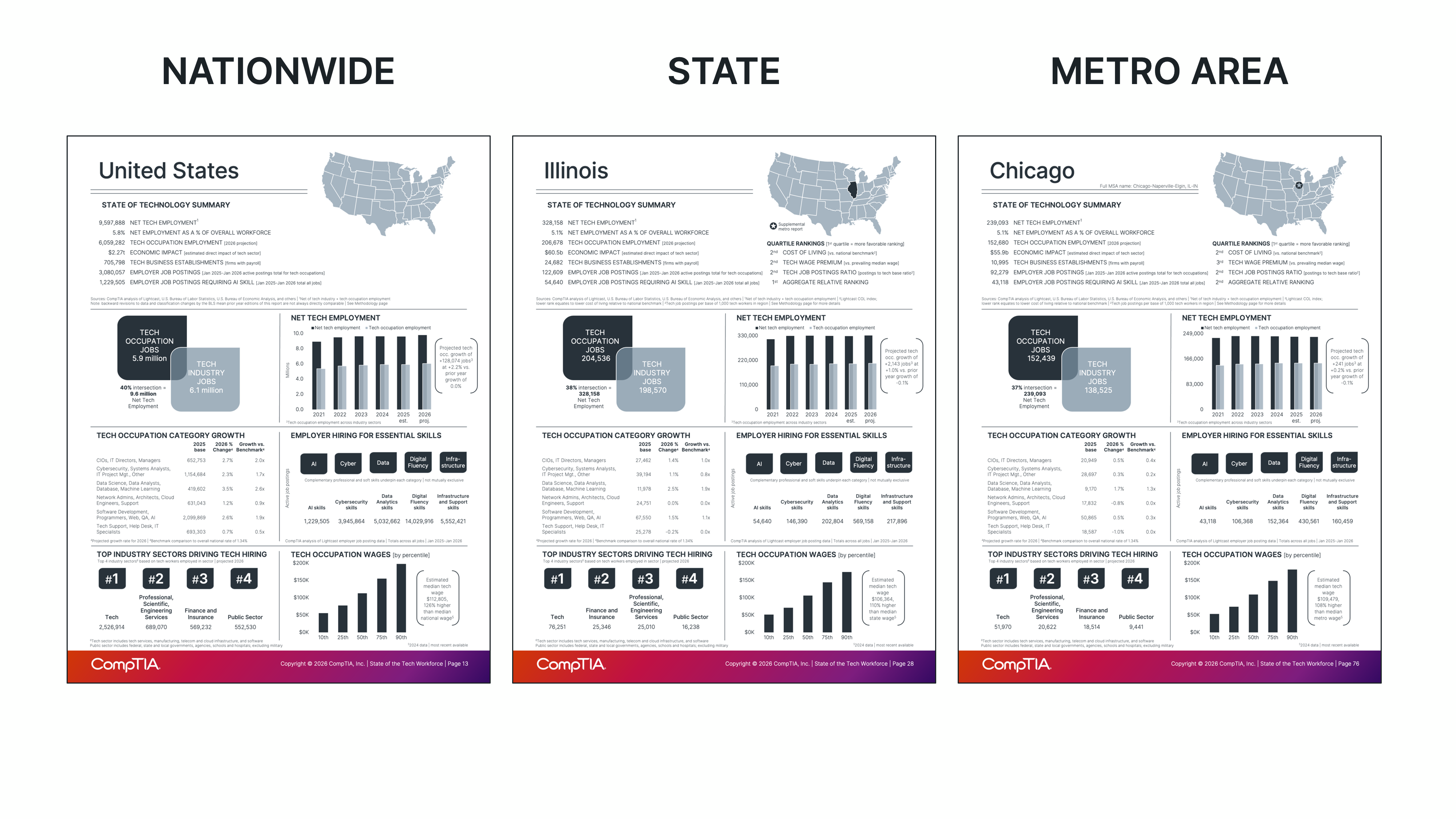
CompTIA’s State of the Tech Workforce, previously known as Cyberstates, provides the definitive guide to tech workforce trends, the number of available jobs in technology, and tech industry employment statistics by state, metro area and nationwide. The State of the Tech Workforce aggregates mountains of data and transforms it into easy-to-understand visuals and actionable insights – the digital economy at your fingertips!
The tech workforce consists of two primary components, represented as a single figure by the ‘net tech employment’ designation. The foundation is the set of technology professionals working in technical positions, such as IT support, network engineering, software development, data scientist, and related roles. Many of these professionals work for technology companies (40%), but many others are employed by organizations across every industry sector in the U.S. economy (60%).
The second component consists of the business professionals employed by technology companies. These professionals – encompassing sales, marketing, finance, HR, operations and management, play an important role in supporting the development and delivery of the technology products and services used throughout the economy.
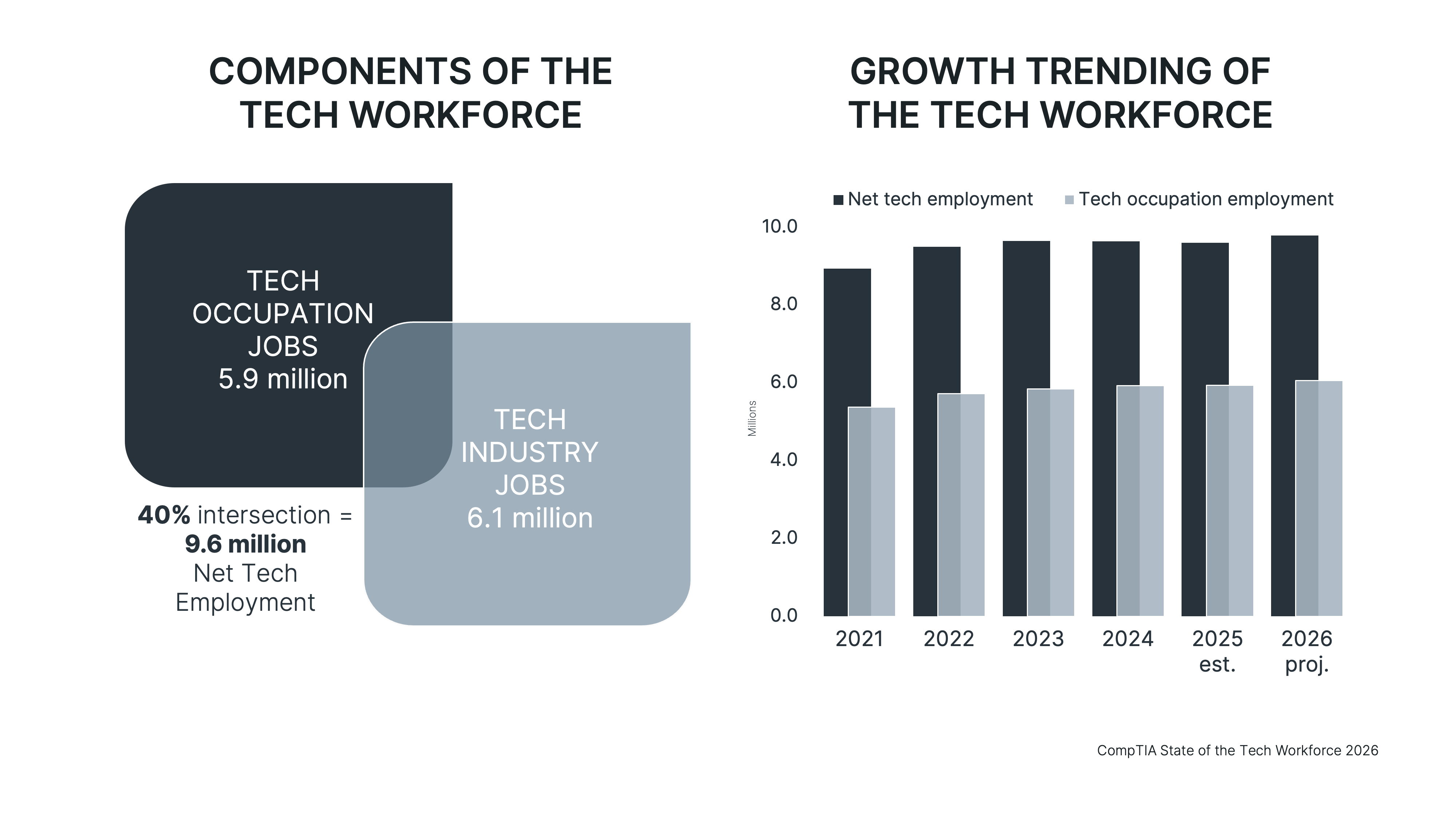
According to projections from the U.S. Bureau of Labor Statistics and Lightcast, in the next ten years the tech workforce will grow twice as fast as the overall U.S. workforce. The replacement rate for tech occupations during the 2026-2036 period is expected to average about 6% annually, or approximately 323,000 workers each year, totaling several million through 2036.
Tech occupations driving this growth are Data Scientists and Data Analysts (420% over the national rate over the next 10 years), Cybersecurity Analysts and Engineers (346%), Software Developers and Engineers (188%), CIOs, IT Directors and Managers (175%), and Software QA and Testers (110%). This confirms the relative strength of tech employment compared to many other occupation categories as companies of all sizes across every industry sector of the economy pursue digital transformation (DX) initiatives. The interconnected nature of technology across software and applications, infrastructure and hardware, data, support operations and cybersecurity means job growth tends to occur in concert.
Employer job posting data provides another layer of near real-time insight into the tech job market and how companies are navigating talent needs due to growth, as well as backfilling for retirements or separations. The top industry sectors employing tech workers employ approximately 94% of workers and the top four are Tech, Professional, Scientific, and Technical services, Finance and Insurance, and the Public Sector.
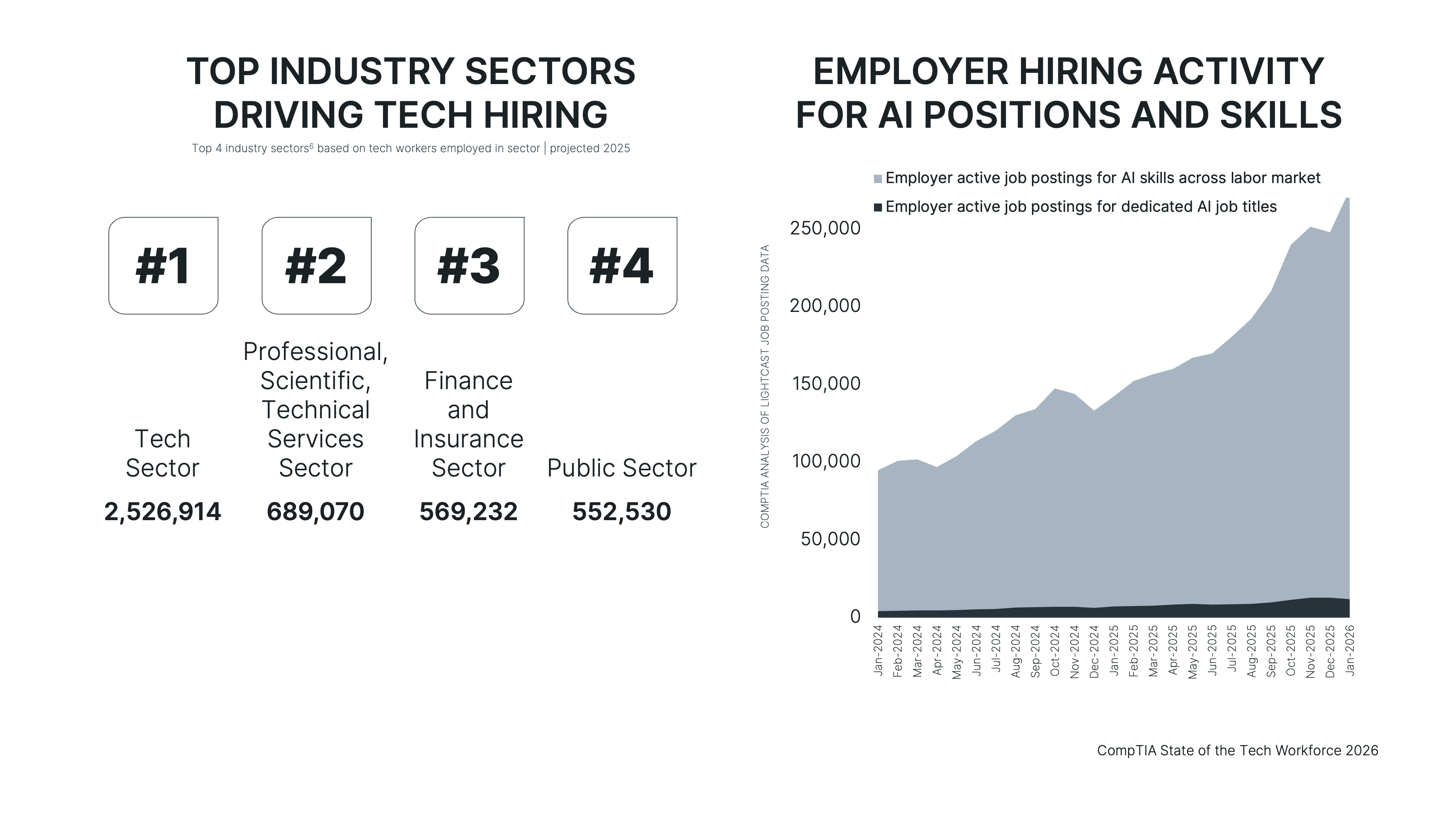
Approximately three years into the generative AI era provides enough of a data track record to glean insights into how AI is shaping the work and business landscape. And yet, many questions and unknowns remain. A review of employer hiring activity via job postings reveals a market dominated by AI skills hiring – reaching nearly 275,000 active job postings for January 2026. See CompTIA's portfolio of AI resources and research for more detail.
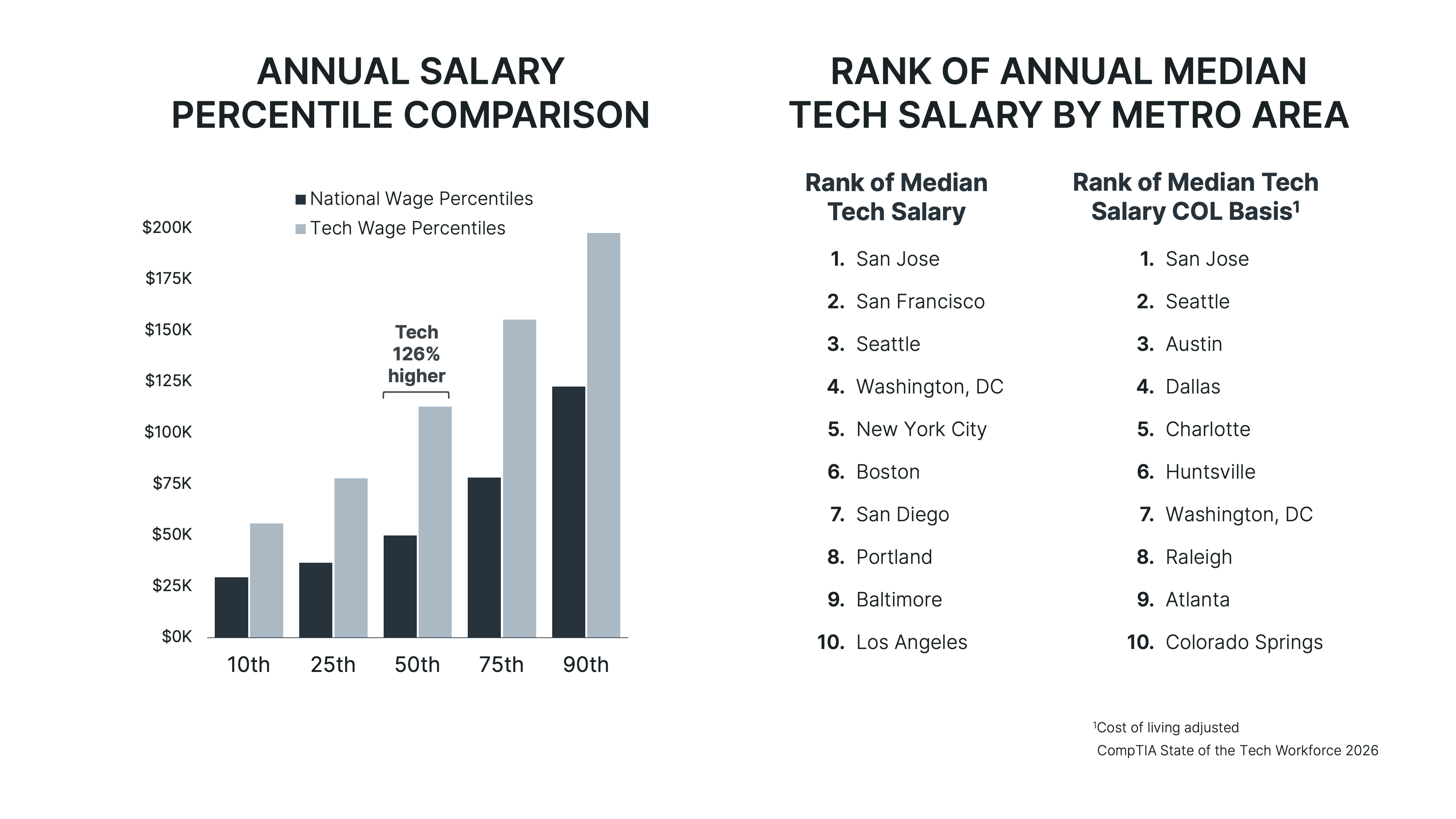
Across all tech occupation categories covered in this report, the median salary, also referred to as the 50th percentile or midpoint, was an estimated $112,805 for the most recent year of available data. This figure is more than double the median wage across all occupations of the U.S. labor force, reflecting the premium in earnings associated with in demand tech job roles.
Percentiles help to provide insight into how salaries progress throughout a tech career, with the upper levels at the 75th or 90th percentile range achieved through years of experience, training and certifications. Of course, there are many nuances with salary data due to cost of living (COL) factors across regions. Please see the full report for a deeper dive into tech workforce earnings.
Read more about tech industry sectors.